
Review · MALAGA
Horse and Flamenco Show in Malaga
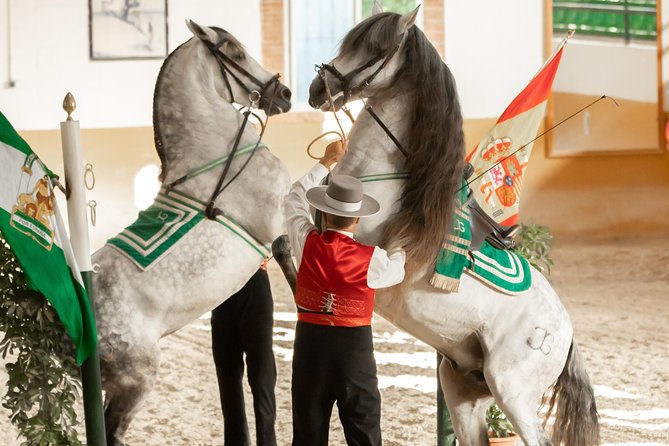
Malaga’s Ritmo a Caballo puts horses at center stage. At Club Hípico El Ranchito, about 20 Andalusian horses and their riders perform choreographed dressage, traditional vaquera riding, and theatrical numbers to Spanish music. A flamenco dancer joins the action, but this is first and foremost a horse show.
I like the chance to visit the stables before the performance and the fact that every seat in the indoor arena gives a clear view. I also like the sense of occasion: costumes, music, trained horses, and a show directed by champion rider José Carlos González Guerrero. The main caution is horse welfare. Some people have found parts of the handling and stable conditions troubling, so this is not an easy recommendation for every equestrian.
Key points to know
- A 90-minute equestrian performance: Expect dressage, vaquera riding, music, costumes, and a short flamenco element rather than a full flamenco evening.
- Twenty trained horses: The horses perform a range of choreographed numbers, including demanding movements and theatrical tricks.
- Stable access before the show: Arrive early to look around, see horses being prepared, and get more context for the performance.
- José Carlos González Guerrero: The show is directed by a rider who was Spanish champion in 2009 and has won gold medals at SICAB.
- Indoor, but not always cool: The arena can feel hot in summer and warm at other times, while some visitors have found the acoustics only average.
- A mixed welfare picture: Many people admire the horsemanship, but concerns have been raised about tight reins, spurs, bits, stalls, and some training methods.
What happens at Club Hípico El Ranchito
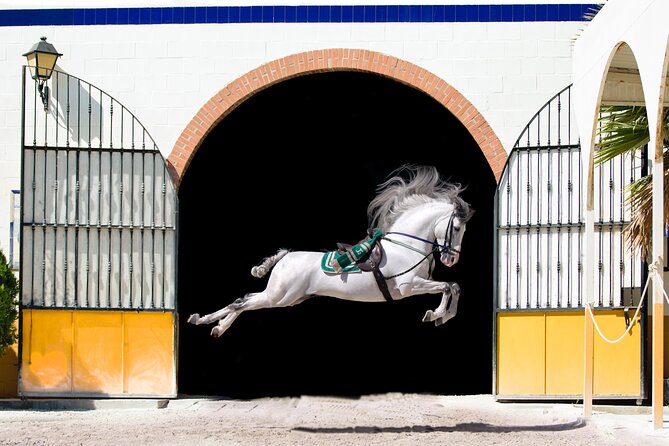
The experience takes place at Club Hípico El Ranchito, outside central Malaga. The main event is called Ritmo a Caballo, an equestrian ballet that has been presented on Wednesdays at 17:45 since 1992.
That long-running format matters. This is not a casual riding demonstration put together for a short tourist season. It is a set performance with rehearsed choreography, costumes, music, and a clear artistic aim. The show uses movements drawn from classical dressage and doma vaquera, the traditional working-riding style associated with Spain.
The performance lasts about an hour and a half. You will see riders working in formation, horses responding to subtle signals, and individual acts built around balance, rhythm, and control. Some numbers are graceful and restrained. Others are more theatrical, with a horse performing unusual movements that can draw a strong reaction from the audience.
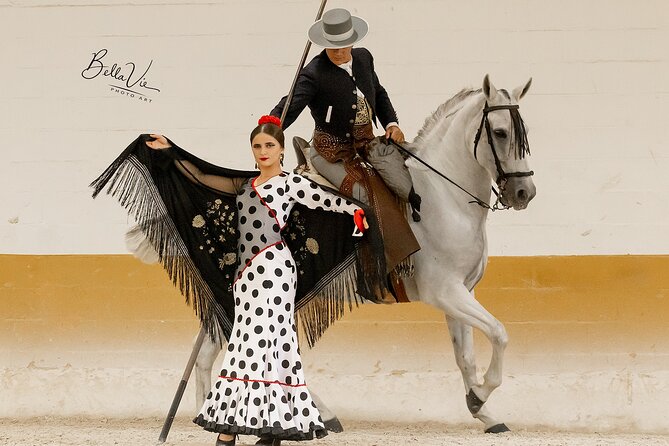
The flamenco element is real but limited. One young dancer appears as part of the equestrian program, sometimes working in close relation to a horse and rider. If you want a complete evening of flamenco with several dancers and musicians, this is the wrong product. If you want horses first, with flamenco as a colorful addition, the balance makes more sense.
More Shows in Spain:
- Cadiz: Andalusian Horses and Bulls Country Show
★ 4.6 · 189 reviews - Torremolinos: Spanish horse and flamenco show
★ 4.5 · 162 reviews - Andalusian Horses and Flamenco show with transportation
★ 4.0 · 77 reviews
Why the horses are the main event
The strongest part of the experience is the interaction between horse and rider. A good dressage performance can look effortless, but the appeal lies in noticing how much control sits behind each movement. Horses work to rhythm, change direction, hold positions, and respond to riders who appear almost still in the saddle.
The program draws on both classical dressage and vaquera riding. Classical dressage brings precision and controlled movement. Vaquera riding adds a more traditional Spanish flavor, linked to practical work with cattle and the riding culture of Andalusia. Together, they give the show more range than a simple parade of horses.
The costumes help create the old Andalusian setting. Riders appear in traditional dress, and the music gives the numbers a staged, almost storybook quality. Some of the presentation can feel more theatrical than strictly traditional, but that is part of the appeal for families and first-time spectators.
José Carlos González Guerrero directs the production and is presented as the main rider. His listed achievements include becoming Spanish champion in 2009 and winning gold medals at SICAB, one of the major events in the equestrian world. You do not need an equestrian background to enjoy the show, but knowing this gives you a better sense of the level of riding the production aims to present.
Arrive early for the stable visit
One of the most useful features is the chance to see the stables before the performance. I would arrive early rather than treat the show as a simple sit-down event. The stable visit lets you see the horses at close range and watch some of the preparation before the arena opens.
This is also the best time to get your bearings. The venue can be a little difficult to find, especially if you are driving for the first time. A rental car gives you more control over timing, and free parking is included. Parking is not a reason to book the show by itself, but it removes one common source of stress.
The stable area has produced different impressions. Some people have found the stalls clean and appreciated seeing horses being saddled. Others have described cramped conditions, manure underfoot, and too little room for the horses to move. The provider says the horses do not stay at the show facilities all day and are moved to other facilities where they can move freely.
You should take both points seriously. Seeing the stables is useful, but it is not a guarantee that you will feel comfortable with every aspect of the horses’ care. If animal welfare is central to your travel choices, this pre-show visit may raise questions rather than settle them.
Inside the 90-minute performance
The show begins in an indoor arena and normally starts on time. The space allows a clear view from the seating, which is important because the small movements of dressage are easy to miss from a poor angle. You are close enough to appreciate the horses without being on the arena floor.
The indoor setting protects the program from rain and gives the production a controlled stage. Its weakness is temperature. Several people have found the arena very hot during warm weather, and summer heat can make a 90-minute show feel longer. The venue has mist fans and air-conditioning units, but these may not fully solve the problem during a heat wave.
The sound is functional rather than polished. Music carries the performance, yet the acoustics have been described as only average, and some selections may strike you as old-fashioned or a little hokey. That is a matter of taste, but it is worth knowing if you expect a slick theatre production.
The show’s best moments come when the horse and rider share the focus. The audience gets to watch several riders demonstrate control, timing, and patience. Some sequences use multiple horses, while others feature a single rider and horse in a more intimate display.
There are also moments of showmanship. A horse may rear or walk on its hind legs, and the audience is encouraged to respond. These tricks can be exciting, especially for children, but they are also where questions about training methods become most important.
More Horseback Riding Tours in Spain:
- El Salobre: Horse Riding Adventure with Transfer Options
★ 4.5 · 2,034 reviews - Mallorca: Horseback Riding Experience with Food Options
★ 4.6 · 1,424 reviews - Jerez de la Frontera: Andalusian Horse Dance and Museums
★ 4.7 · 1,289 reviews - Jerez: Yeguada de la Cartuja Carthusian Horses Tour
★ 4.8 · 970 reviews
The flamenco section: a graceful extra, not a full show
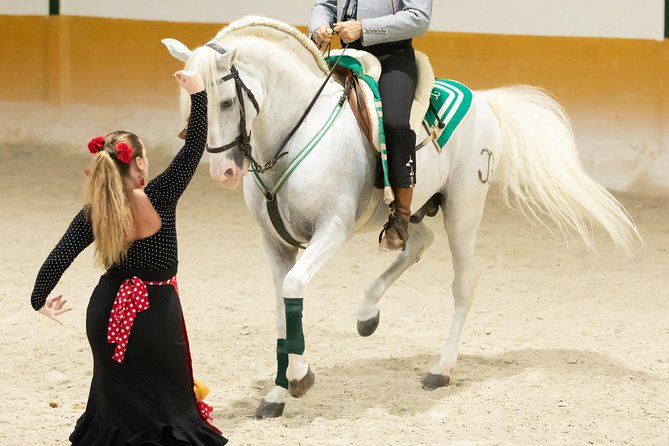
The flamenco dancer adds movement, color, and a human focal point between equestrian numbers. The sight of a dancer performing near a horse can be striking, and the contrast between footwork, costume, and the horse’s controlled movement gives the program its most unusual image.
Still, keep your expectations in line with the title. The flamenco section is small. The event is primarily an equestrian show, and the dance does not compare with a dedicated flamenco performance in Malaga or Seville. Some people have found the dancer excellent and expressive. Others have felt the costumes looked dated or that the flamenco fell short of what they expected from Spain.
I would book this for the horses and regard the dance as a bonus. If flamenco is your priority, choose a purpose-built flamenco evening instead. If you want to see Spanish riding with a touch of dance, the mix is more likely to satisfy.
A candid look at horse welfare
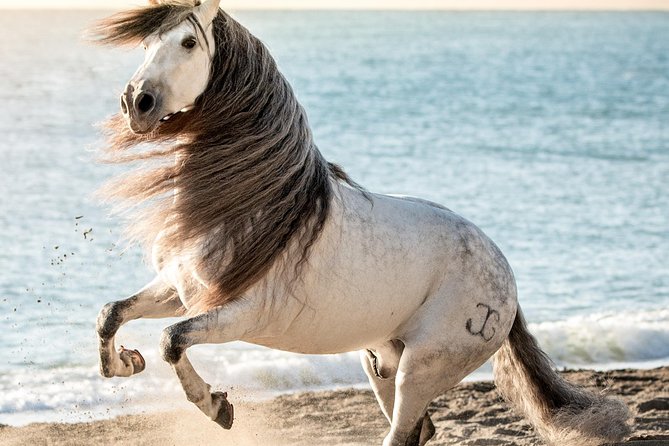
This is the part I would not skip. Many equestrian performances ask you to admire the bond between horse and rider. That admiration should not prevent you from asking how the horses are handled.
The positive side is clear. The horses are trained to work in a busy arena with music, costumes, riders, and an audience. Several acts require balance and concentration. Many people see careful horsemanship and a strong sense of partnership, and the horses are often described as beautiful, well trained, and impressive.
But some specific concerns have been raised. One person noticed a horse with a raw-looking area that appeared connected to spur use. Another found a horse’s rein very tight and observed heavy breathing while the horse stood still. A separate act involving a horse lying down was viewed as forceful and upsetting.
Concerns have also focused on bits, branding, stall conditions, and the general treatment of the horses. The provider says some handling can appear harsh while still reflecting affection for the horses, and it states that the animals are not kept all day in the show facilities.
You will need to make your own call. I would not dismiss the welfare concerns as simple sensitivity, especially if you know horses well. At the same time, the program clearly requires substantial training, and not every rider or act has been judged negatively. The honest description is mixed: impressive horsemanship in places, with methods and facilities that some people find unacceptable.
Is $41.03 a fair price?
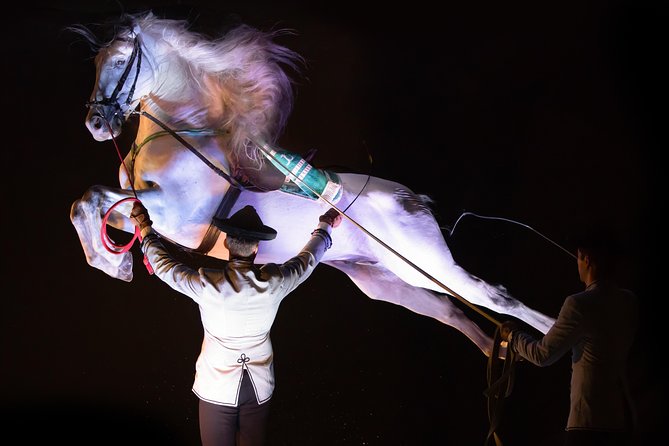
At $41.03 per person, the value depends on what you want from a Malaga evening. For 90 minutes of live performance, the price is reasonable if you enjoy horses, family entertainment, and staged Spanish culture. Free parking, free Wi-Fi, and stable access add some practical value.
The price feels less attractive if you are mainly seeking flamenco. You are not buying a full dinner, drinks, or a complete dance production. Snacks, soda, alcohol, and dinner are not included, so plan to eat separately.
I also would not pay this price simply because you have seen the words Andalusian night or ballet and expect a grand theatre. The setting is functional, the acoustics are not exceptional, and some costumes and furnishings may look dated. The value comes from the horses and the live skill on display, not from luxury surroundings.
The event is often booked about 16 days ahead. That suggests you should plan it before your Malaga visit if the Wednesday performance fits your schedule, especially during busy periods. Confirmation arrives when you book, and mobile tickets make admission straightforward.
Who will enjoy this most?
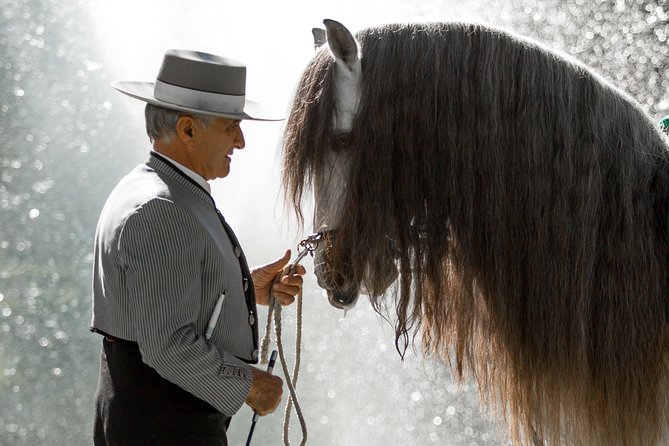
This is a good fit for horse lovers, families with children, and anyone curious about Spanish riding traditions. Children up to age five enter free, which improves the value for families. Most people can participate, and service animals are allowed.
You may also enjoy it if you want an evening activity that is different from a museum, cathedral, or restaurant. The show gives you a direct look at riding, costumes, and performance rather than a lecture about Andalusian culture.
I would be more cautious if you have a serious allergy to animal hair or dander. The experience takes place around horses and in stable areas, so it is specifically not recommended for people with that problem.
Accessibility needs careful checking. One account says the show area requires five steps and is not suitable for wheelchair users, while another description indicates access for people with reduced mobility. Because the information is inconsistent, contact the provider before booking if step-free access is essential.
The show is offered in English, but the appeal is visual and musical, so you do not need advanced language skills to follow the main action.
Practical tips for a better evening
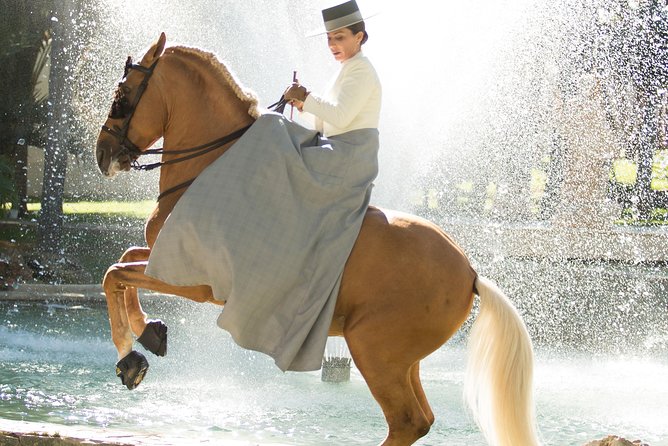
Arrive early for the stable visit and to avoid a rushed search for the venue. Free parking is available, but the site can be hard to find, so allow extra time if you are driving.
Wear layers. The arena can be hot in summer, yet one person specifically advised wearing warm clothes, suggesting that conditions may vary. Comfortable shoes are sensible for the stable area and the entrance steps.
Do not plan on dinner being served at the venue. Food and drinks are not included, and the listed exclusions cover snacks, soda, alcohol, and dinner. Eat beforehand or arrange a meal afterward.
Keep your expectations focused on horses. The flamenco dancer is a pleasant part of the program, but the event is not a full flamenco show. That single adjustment prevents the most common mismatch between expectation and experience.
Finally, if you book and later change your mind, free cancellation applies only when you cancel at least 24 hours before the start time. Changes or cancellations inside that window are not accepted for a refund.
Should you book Ritmo a Caballo?
Book it if you want to watch trained Andalusian horses perform classical and vaquera riding in a theatrical setting, and if a short flamenco appearance sounds like a good extra. The stable visit, free parking, clear arena views, and champion-led production make it a useful choice for horse lovers and families.
Skip it if you want a polished flamenco evening, a cool and modern theatre, or a show with no ethical questions around animal training. I would also hesitate if horse welfare is a deciding factor for you, since the concerns about spurs, reins, bits, stalls, and training methods are specific enough to deserve attention.
For the right audience, this is an unusual Malaga night: horses first, Spanish pageantry second, flamenco third. Know that order before you pay, and the experience is more likely to feel worth the price.
FAQ
Where does the horse and flamenco show take place?
It takes place at Club Hípico El Ranchito in Malaga, Spain.
How long does the show last?
The performance lasts approximately 1 hour and 30 minutes.
When is Ritmo a Caballo performed?
The show is presented every Wednesday at 17:45.
How many horses appear in the performance?
About 20 horses take part in the program.
Is flamenco the main part of the show?
No. The main event is an equestrian show featuring classical and vaquera dressage. A flamenco dancer forms one part of the performance.
Can I visit the stables before the show?
Yes. You can visit the stables before the performance and see the horses being prepared.
Is parking included?
Yes. A free parking spot is included.
Are children allowed to attend free of charge?
Children up to five years old can enter free.
Can I cancel for a refund?
Yes, if you cancel at least 24 hours before the experience begins. Cancellations made less than 24 hours before the start time are not refunded.
Just added around Spain
- Arcos de la Frontera: Horseback Riding Experience★ 3.5 · 13 reviews
- Andalucia: Horse Riding Tour with Picnic★ 5.0 · 3 reviews
- Almeria: Tabernas Desert Horse Riding for experienced riders★ 4.9 · 14 reviews
- 2 hours Green Mountains Horse Riding Tour★ 4.4 · 22 reviews
- Horseback riding around Doñana National Park★ 5.0 · 89 reviews
- Jerez and Cadiz with Horse Ballet and Sherry Tasting from Seville★ 4.5 · 45 reviews
- From Seville: Horseback Riding Experience in Aljarafe★ 4.3 · 51 reviews
- Horseback riding and wine tour (private tour)★ 5.0 · 9 reviews
Malaga Horseback Riding Tours, compared.
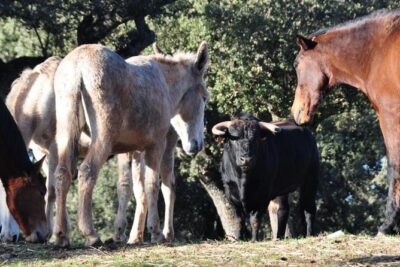
Guided horseback tour through the Guadalhorce Valley
Read our review →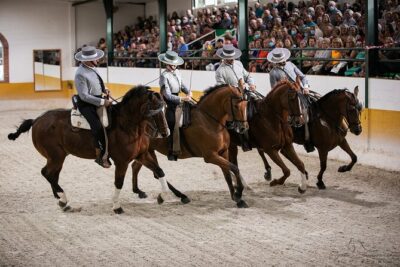
Andalusian Horses and Flamenco show with transportation
Read our review →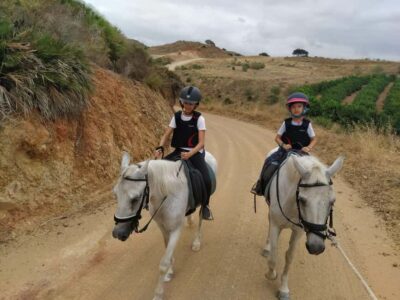
Malaga – 1-hour Horseback Riding Tour with a Local Guide through the Guadalhorce Valley
Read our review →Browse the lists this tour appears in