
Review · SPAIN
Jerez de la Frontera: Andalusian Horse Dance and Museums
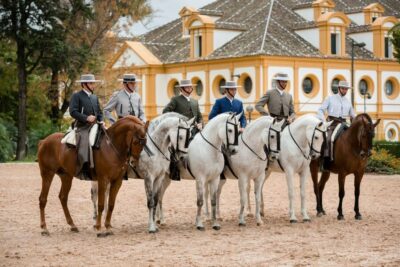
The main event is a polished equestrian ballet at the Royal Andalusian School of Equestrian Art, where Andalusian horses perform passage, piaffe, Spanish walk, pirouettes, carriage work, and high-school dressage to Spanish music. It is not a circus act. The appeal lies in the quiet control between horse and rider.
I like the chance to see the horses training and being groomed before the show, and I like that the ticket also covers the Art Equestrian Museum and Carriage Museum. The main drawback is timing: to see everything, you need to arrive early, and the seating can be uncomfortable despite the good views.
Key points to know before you go
- The 90-minute show runs from noon to 1:30 p.m. and includes six to eight choreographies.
- The horses perform classical dressage, Doma Vaquera, carriage work, and traditional riding exercises.
- Arrive early for the museums and audio-visual presentation, since some areas close before or around the show.
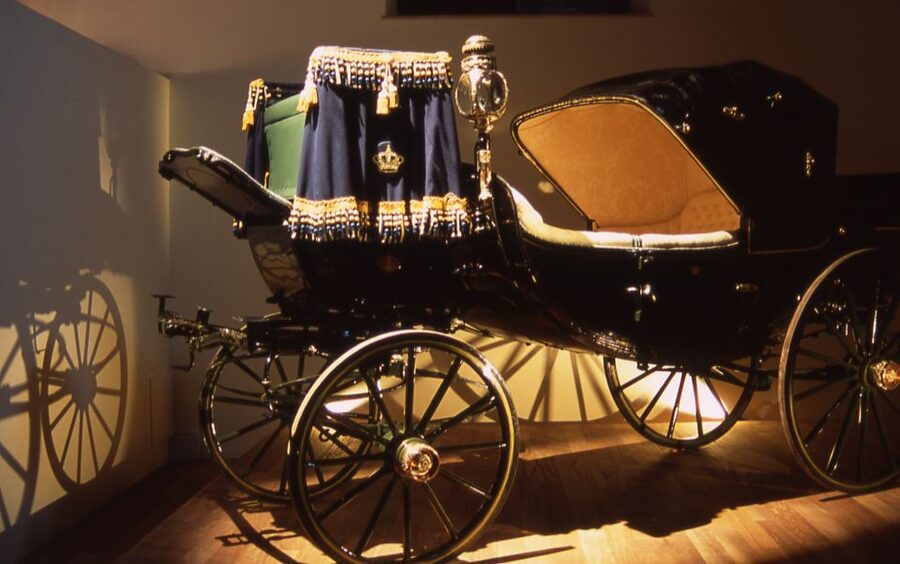
- The Carriage Museum is a highlight, with historic vehicles, harnesses, and equestrian clothing.
- Training areas and stables add real value, especially if you care about horse care and preparation.
- The $38 price is good for a half-day cultural visit, but plan around Saturday and public holiday closures.
Why the Andalusian horse show feels different
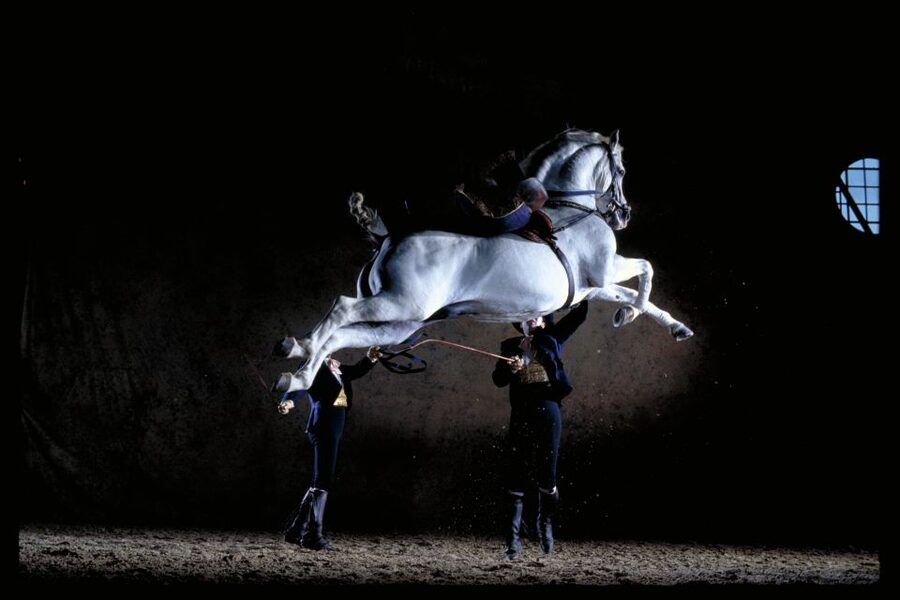
The show is often compared with the famous Lipizzaner performances in Vienna, but the Jerez presentation has its own Spanish character. The horses are Andalusians, known for their proud carriage, compact strength, and ability to perform precise movements while appearing calm and light on their feet.
The program uses Spanish music and riders dressed in 18th-century style costumes. That setting gives the performance a formal, old-world air, but the riding itself remains the focus. You see advanced exercises based on classical dressage, Doma Vaquera, and practical work once used with horses in daily life.
I especially like the contrast between power and restraint. A horse may lift its legs high in the Spanish walk, then pause with astonishing control. In another sequence, several horses perform together, matching their movements with the riders and with one another.
The show usually contains six to eight sections. The exact order can vary, but the program may include The Colts, Airs on Horseback, Pas de Deux, Passage and Piaffer, Domino on Horseback, Airs Above the Ground, and Fantasy.
Some titles sound theatrical, and parts of the performance are certainly staged as spectacle. Still, the most impressive moments are often the simplest ones: a clean transition, a perfectly timed halt, or a line of horses moving together without visible confusion.
More Museum Visits in Spain:
- Customized Day Tour to Terracotta Army and Horses Museum
★ 5.0 · 37 reviews - Half-Day Tour: Terracotta Warriors and Horses Museum
★ 5.0 · 7 reviews
The 12:00 p.m. performance and what you will see
The central performance lasts about 90 minutes, from noon until 1:30 p.m. That length feels right. You get enough variety to see the school’s full range without watching the same movement repeated too many times.
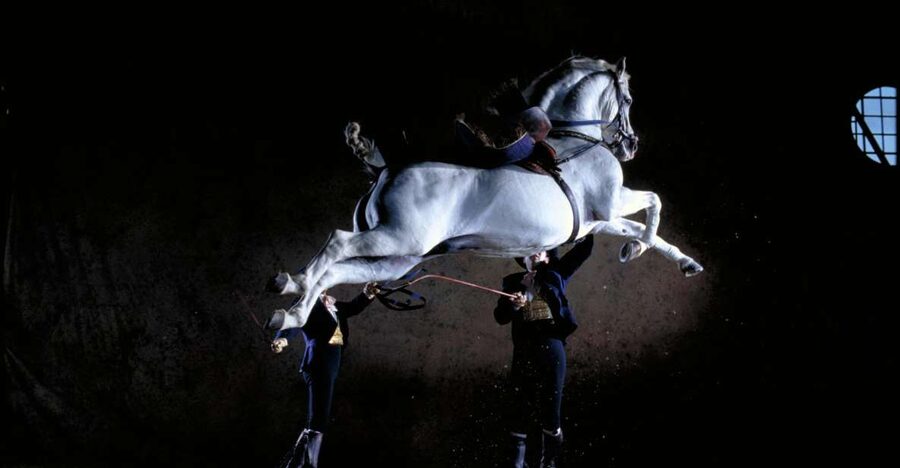
The riders demonstrate haute école, or high-school dressage, with exercises such as the levade, capriole, courbette, piaffe between pillars, and Spanish walk. These movements demand years of training. The horse must respond to small signals, and the rider must remain balanced without distracting from the animal’s movement.
The Pas de Deux is one of the clearest examples of this partnership. Two horses and riders work together in matched patterns, making the precision easy to appreciate even if you know little about dressage.
The carriage section changes the mood. Horses pull vehicles using traditional harnesses while coachmen guide them through turns and controlled movements. The carriages once served as transport, but here they are used for sport and display. Watch the harness work as closely as the horses. It shows how much skill is required from the person handling the reins and vehicle.
The final group display brings several horses and riders together for advanced movements in unison. It is a fitting finish because you can see the whole school’s style at once: discipline, formation, music, costume, and careful timing.
The horses are the reason to come, but the show is also about the relationship between horse and rider. You may not understand every technical movement, yet the difference between force and communication is plain. The best moments look almost effortless.
Arrive early for the palace, film, and gardens
The entrance is through the Visitor Reception Centre, where you exchange your ticket at the ticket office. Bring your passport or identity card, as identification is required.
If you want the fullest visit, do not treat the noon show as your arrival time. The audio-visual presentation is available until 11 a.m., and the museums have their own opening windows. The early portion gives you context before the horses appear in the arena.
The presentation explains the development of equestrian art in Andalusia through film and audio-visual material. It is useful because it gives names and background to the riding traditions you later see in motion.
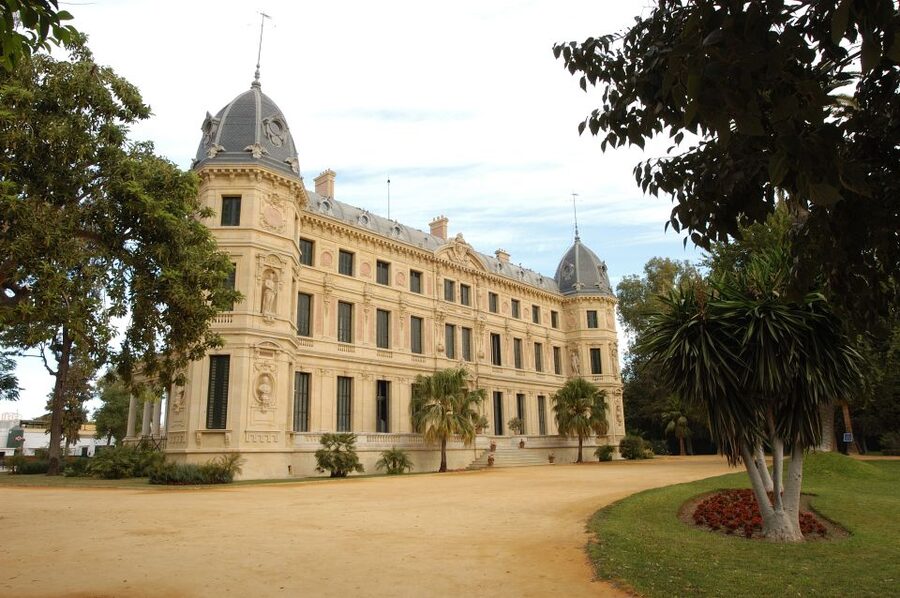
From the reception area, you enter the gardens. The grounds include exotic plants and lead toward the palace, a handsome 19th-century building. The gardens provide a pleasant break between indoor exhibits and the show, especially on a warm day.
The palace and saddlery are closed on Saturdays and public holidays. That matters because the ticket may still include other parts of the visit, but you will not see every section on those days. Check the schedule before you commit to a date.
The Art Equestrian Museum explains the tradition
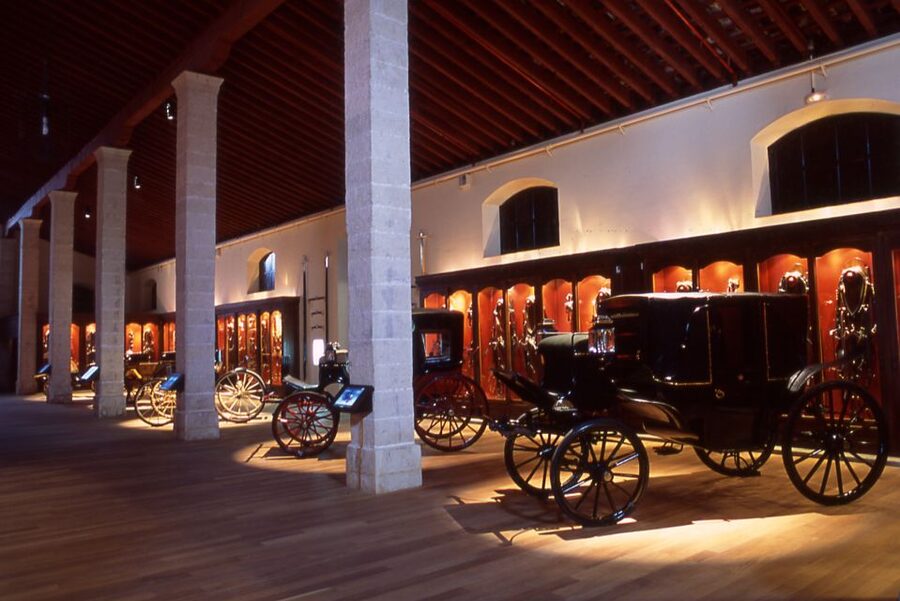
The Art Equestrian Museum occupies 11 rooms in the basement. This is not a quick display of horse pictures. It traces the origins and development of equestrian art and explains the place of the horse in Andalusian culture.
I find this museum most useful when visited before the performance. The show gives you movement and emotion, while the museum gives you the vocabulary and background to understand what you are seeing.
Film clips and written material explain aspects of horse training, the school, and the development of riding techniques. Information is available in English as well as Spanish, which makes the visit easier for international visitors.
The exhibits cover the craft behind riding, too. The saddlery is where harnesses are made and repaired. That practical detail helps you see the school as more than a performance venue. The polished show depends on skilled work in tack, grooming, training, costume, and carriage handling.
You should allow enough time here rather than rushing through to secure an early arena seat. The museum is open from 10 a.m. to 2 p.m., so the morning is the natural time to visit.
More Horseback Riding Tours in Spain:
- El Salobre: Horse Riding Adventure with Transfer Options
★ 4.5 · 2,034 reviews - Mallorca: Horseback Riding Experience with Food Options
★ 4.6 · 1,424 reviews - Jerez: Yeguada de la Cartuja Carthusian Horses Tour
★ 4.8 · 970 reviews - Jerez: Royal Andalusian School of Equestrian Art Admission
★ 4.6 · 882 reviews
The Carriage Museum is more than a side attraction
The Carriage Museum comes near the end of the visit and is open from 10 a.m. to 3 p.m. It displays a broad selection of carriages, along with harnesses and equestrian costumes.
This section helps explain why the carriage performance matters. A carriage is not just a decorative object behind a horse. It has weight, balance, wheels, fittings, and harness arrangements that require precise handling.
The collection also shows how transport vehicles became part of formal display and sport. If you enjoy design, craftsmanship, or old transport, give this museum proper time. You can easily spend longer here than expected, especially when examining the details of the vehicles.
Photography is restricted in the museums and other areas. The supplied rules prohibit cameras and video recording, while one visitor account indicates that photos may be permitted in the arena without flash. Follow the instructions given on arrival rather than assuming your phone is allowed. In practice, the no-photo rule may help you pay closer attention to the show and exhibits.
Training areas add the most personal touch
The performance is polished, but the training areas and stables can make the visit feel more connected to the horses. Depending on access and the day’s schedule, you might see horses being groomed, warmed up, schooled, or prepared for the arena.
This is where you notice the work behind the graceful final product. Grooms attend to the horses, riders practice movements, and young equestrians may be working in the exercise areas. The preparation can be as interesting as the performance itself.
Some visitors have enjoyed being close enough to give the horses attention in the stables. Access can vary, so do not assume every stable area will be open at every moment. Still, the chance to see preparation at close range is one of the strongest reasons to arrive early.
If you can add a behind-the-scenes or training option to your day, it may be worthwhile, particularly if you own horses or follow dressage. One account specifically wished they had paid extra for the after-show training portion. That is a useful clue about where horse enthusiasts may want to spend their money.
Seating, heat, and practical comfort
The venue generally provides good views from the seats, and some seating has generous legroom and enough space for people to enter and leave without making everyone stand. Still, comfort is not perfectly consistent. One account described the seats as very uncomfortable, so bring modest expectations for the 90-minute performance.
Jerez can be extremely hot. A performance day in summer may bring temperatures around 37 Celsius. Drink water, use the shaded or indoor areas when available, and avoid treating the gardens as a place for a long midday wander.
A snack bar offers drinks and light food. It may be useful after the show, though it is described as minimal rather than a full meal stop. The site also has a souvenir shop, but its closing time may not match your schedule. Do not leave shopping until the very last minute.
Photography, smoking, pets, glass objects, weapons, and sharp items are not allowed under the stated rules. Video recording is also prohibited. Bring identification, but leave unnecessary items behind so the entry process stays simple.
Getting there from Jerez, Seville, or Cádiz
The Royal Andalusian School is an easy taxi ride of about 10 minutes from the Jerez train station. You can also walk from central Jerez, although the exact time depends on where you stay.
The site can work as a day trip from Seville. Train travel followed by a taxi is a practical combination, but book the return train in advance if you are visiting on a busy date. A late finish at the school can leave you waiting a long time for the next available train.
Cádiz port is also within reach by taxi, with one account estimating about 30 minutes. That may suit a cruise stop, but allow a generous margin for the return journey and port timing.
Drivers should note that parking can be difficult, and surrounding streets have fines. I would favor a taxi or public transport unless you already know where you can park legally.
Once you arrive, go to the ticket office to exchange your booking. Signage is generally clear, but the route between the show grounds, museums, and stables may not always be obvious. If staff direct you outside and along the main street, pay attention to the building entrances. It is worth asking for a clear map or directions before setting off.
Is $38 good value?
At $38 per person, this is a strong half-day purchase if you want more than a single performance. You are paying for the 90-minute show plus access to the Art Equestrian Museum, Carriage Museum, gardens, audio-visual presentation, palace areas when open, and saddlery when open.
The price is especially fair for horse lovers. You can study training methods, tack, carriages, costumes, and the history of Andalusian riding before watching the finished performance.
The value is less obvious if you only want a quick show and have no interest in museums. In that case, the early arrival and multiple buildings may feel like extra work. Even then, the horse ballet is the kind of cultural event that is difficult to duplicate elsewhere in Andalusia.
The experience is wheelchair accessible. Hours and closures matter more than the price, so check the date carefully, particularly around Saturdays and public holidays.
Who should book this experience?
I would choose this for anyone who loves horses, dressage, traditional Spanish culture, carriages, or carefully staged live performance. It also works for families. Even young children have been absorbed by the horses, though the long museum portion may require some patience.
You do not need to be a dressage expert. The music, costumes, formations, and carriage work make the performance readable to a general audience. Horse owners and equestrian professionals will notice much more detail in the training and technical movements.
I would be less enthusiastic if your schedule is tight or if you dislike formal performances. The show is controlled and traditional, not a casual encounter with rural Andalusia. You should also reconsider if you cannot arrive early enough for the museums, since much of the $38 value lies outside the arena.
Should you book the Andalusian horse show?
Yes, if you can give it the full morning and early afternoon. The strongest plan is to arrive in time for the audio-visual presentation, visit the Art Equestrian Museum and Carriage Museum, look for training activity, then take your seat for the noon show.
Book it for the horses, but keep the museums and stables in your plan. The performance is the emotional center, while the collections and preparation areas explain how that polished 90 minutes is created.
Reserve ahead if you are traveling from Seville or Cádiz, especially for the return train. Check closures, carry identification, follow the photography rules, and leave room for the possibility that seating or refreshments may be less comfortable than expected.
FAQ
How long does the experience last?
The full experience lasts about 3.5 hours. The main horse show runs from 12 p.m. to 1:30 p.m., with the museums and other facilities visited around it.
How much does the experience cost?
The listed price is $38 per person.
What happens in the main horse show?
You see six to eight choreographies featuring Andalusian horses and Spanish riders. The program may include a Pas de Deux, passage and piaffe, Spanish walk, carriage work, airs above the ground, and other classical dressage exercises.
What museums are included?
Admission includes the Art Equestrian Museum and the Carriage Museum. The Art Equestrian Museum has 11 rooms covering equestrian art and the horse in Andalusia. The Carriage Museum displays vehicles, harnesses, and equestrian costumes.
What time should I arrive?
Arrive in the morning if you want to see the audio-visual presentation and museums before the noon show. The audio-visual presentation is available until 11 a.m., and the Art Equestrian Museum opens from 10 a.m. to 2 p.m.
Are the palace and saddlery always open?
No. The palace and saddlery are closed on Saturdays and public holidays. Check the schedule for your chosen date.
Can I take photographs or record video?
The stated rules prohibit cameras and video recording. One account indicates that photos may be allowed in the arena without flash, so follow the current instructions from staff when you arrive.
Is the venue wheelchair accessible?
Yes, the experience is listed as wheelchair accessible.
Just added around Spain
- Arcos de la Frontera: Horseback Riding Experience★ 3.5 · 13 reviews
- Andalucia: Horse Riding Tour with Picnic★ 5.0 · 3 reviews
- Almeria: Tabernas Desert Horse Riding for experienced riders★ 4.9 · 14 reviews
- 2 hours Green Mountains Horse Riding Tour★ 4.4 · 22 reviews
- From Seville: Horseback Riding Experience in Aljarafe★ 4.3 · 51 reviews
- Horseback riding around Doñana National Park★ 5.0 · 89 reviews
- Jerez and Cadiz with Horse Ballet and Sherry Tasting from Seville★ 4.5 · 45 reviews
- Horseback riding and wine tour (private tour)★ 5.0 · 9 reviews
Spain Horseback Riding Tours, compared.
El Salobre: Horse Riding Adventure with Transfer Options
Read our review →
Horseback Riding Experience with Food Options
Read our review →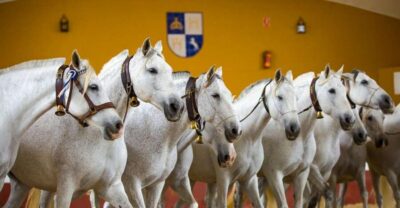
Royal Andalusian School of Equestrian Art Admission
Read our review →
Montserrat Monastery & Horse Riding Experience from Barcelona
Read our review →
Almeria: Horse Riding Tour Through the Tabernas Desert
Read our review →
Browse the lists this tour appears in