
Review · ULAANBAATAR
Mongolia Nomad Trek • On-Foot & Horseback ~ 15 Day
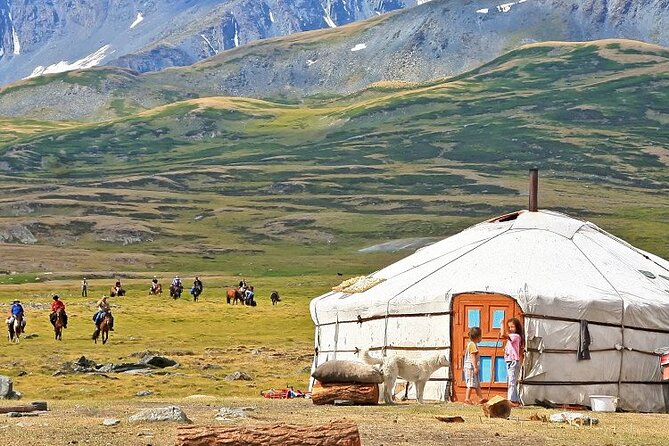
The best part of this journey is its unusual mix of serious mountain trekking and living nomadic tradition. You move through western Mongolia by foot, horse, camel, vehicle, and plane, with time for Kazakh horse games, eagle hunting, ancient rock art, and camps beneath snowy peaks. Eddie Frank, Tusker Trail’s founding guide, leads the expedition.
I like the steady change of scenery, from Ulaanbaatar’s theaters and cashmere shops to Khoton Lake, high tundra, and the Potanin Glacier. I also like the choice built into the trip: you can hike, ride, or combine both, and Eddie provides riding clinics for people who are not yet comfortable on horseback.
The main drawback is the physical demand. Several days involve six to nine hours on the trail, with steep climbs, high altitude, river crossings, frost-heaved ground, and a pass reaching about 10,350 feet. Long drives and basic camp life add to the effort.
Key points at a glance
- Reach the remote Altai Mountains: Fly west from Ulaanbaatar to Bayan Ulgii, then travel by road to Khoton Lake and Tavan Bogd National Park.
- Ride with Kazakh nomads: Learn basic Mongolian horseback riding, visit ger camps, and watch traditional horse games at the Tusker Nadaam.
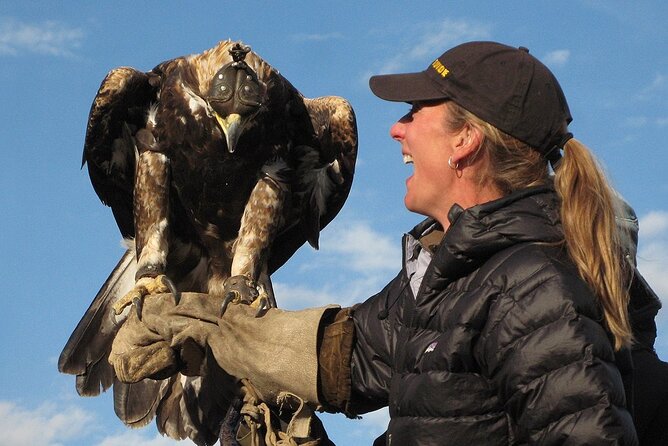
- See Mongolia’s eagle-hunting culture: In Bayan Ulgii, you try to meet a local Kazakh eagle hunter and see a trained bird of prey up close.
- Cross real mountain terrain: Expect river valleys, alpine forest, a high pass, snow in some conditions, and a challenging walk to Potanin Glacier.
- Find ancient rock art: Petroglyphs near the Tsagaan Gol River date from about 11,000 years ago through the ninth century.
- Travel as a private group: Only your own group takes part, with private transportation and meals included for most of the trip.
Why this Altai journey feels different
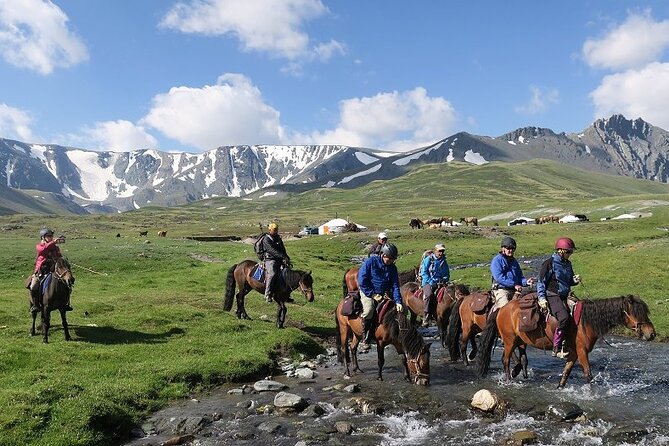
Mongolia is often pictured as endless grassland, but this route takes you into a much wilder western corner. The Altai Mountains rise along Mongolia’s border with China, and the route passes through broad river valleys, forest, tundra, open steppe, and glacial country.
The cultural side matters as much as the walking. You spend time with Kazakh and Tuvan communities, enter traditional gers, see handmade crafts, and watch horse games that are part sport and part social gathering. Nomads still hunt with golden eagles, and the welcome you receive is tied to customs that have lasted for centuries.
This is not a sightseeing loop with a new hotel every night. It is an expedition with a moving camp. Camels carry equipment, horses provide transport and company, and the route follows the natural shape of the mountains and rivers. That makes the trip feel genuine, but it also means you need to be comfortable with changing weather, simple routines, and long periods far from town.
More Horseback Riding Tours in Mongolia:
- Horseback Riding Tour to Turtle Rock & Aryabal
★ 5.0 · 54 reviews - Terelj National Park: Tour with horse riding and hiking
★ 5.0 · 46 reviews - Horse riding experience in Terelj National park 1 day
★ 4.8 · 30 reviews
Days 1 and 2: Ulaanbaatar sets the scene
You begin in Ulaanbaatar, at about 4,429 feet, with airport pickup and two nights at the Tuushin Hotel. This gives you time to recover from the international flight and meet the Mongolian guide before the remote portion begins.
Your first day is open for rest and independent exploring. On the second, your guide helps you see more of the capital, including museums, restaurants, street food stalls, shops, and local cashmere clothing. The city combines older Mongolian traditions with modern urban life, so this pause gives useful context before you head west.
The evening cultural show at the State Academic Theatre of Opera and Dance is a smart addition. Colorful costumes, music, and performances tied to Mongolian history offer a quick introduction to the country’s artistic traditions. It is also one of the few polished indoor evenings on a trip that soon becomes very outdoors-focused.
Day 3: Bayan Ulgii and the first taste of Kazakh culture
A roughly three-hour flight carries you west to Bayan Ulgii Province. After checking into a ger camp, you visit Ulgii’s outdoor market and begin getting to know the region’s Kazakh culture.
This is your chance to look for a local eagle hunter and see the bird of prey at close range. The encounter is not described as guaranteed, so keep expectations realistic, but the setting is important. Bayan Ulgii is the cultural gateway for the Kazakh communities who live in Mongolia’s far west.
You also repack your belongings into waterproof Tusker duffels. These bags are easier to load onto the expedition camels than ordinary luggage. That detail may seem minor, but good packing matters when your kit is moving with the camp rather than sitting in a vehicle.
Days 4 and 5: Khoton Lake and a gentle introduction to riding
The trip’s mountain section begins with a seven to eight-hour drive southwest through Tsengel and across the Khovd River. You reach Khoton Nuur, at roughly 6,820 feet, and camp beside the lake for two nights.
The long drive is a real cost in time, but it takes you into a remote part of Mongolia that cannot be reached quickly by paved tourist routes. Once camp is set, the pace becomes more personal. You meet the nomadic trekking crew and settle in for dinner beside the water.
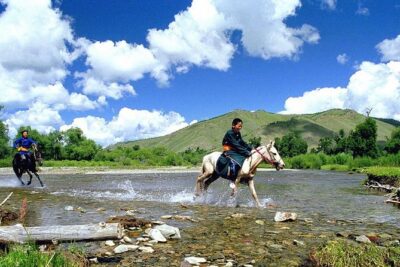
The following morning, Eddie gives a basic riding clinic using Australian saddles. You then take a slow ride through the forest above the lake. This is especially useful if you have always wanted to ride but lack experience. You should not expect a full riding course, but the instruction offers a practical starting point before the route becomes more demanding.
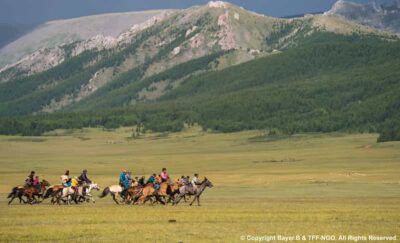
A visit to nearby Kazakh families introduces you to ger life and local customs. The Tusker Nadaam horse games add a lively cultural moment, with local women displaying handmade crafts afterward. Buying something here gives you a direct way to support the people you meet and take home an object connected to the journey.
Same saddle, a different kind of ground:
- MONGOLIAN NOMADS: 2-Day Horse Trekking & Cow Milking Tour
★ 4.8 · 23 reviews - Horse riding in Terelj National Park
★ 5.0 · 14 reviews - Full Day Private Tour in Terelj National Park with Horse Riding
★ 5.0 · 13 reviews - 1 Day Semi-Gobi Tour with Lunch And Enjoying Camel or Horseback
★ 5.0 · 9 reviews
Days 6 to 8: Following the Tsagaan Gol River
With the crew and camels carrying the main load, you begin trekking through alpine forest. The first walking day covers about 13 miles and follows the glacial depression around Khoton Lake. Horizontal benches along the lake show former water levels, shaped by glaciers and ancient ice dams.
The route then follows the Tsagaan Us River, one of the streams feeding Khoton Lake from the Tavn Bogd glaciers. You should expect six hours on foot, high elevation, and changing ground underfoot. The mountain views are rewarding, but this is not a casual lakeside stroll.
On the next day, you cross to the eastern side of the Tsagaan Gol River and climb toward Cheben Hill. The walk is shorter, about nine miles, with camp set above grassy plains and small ger communities. The quiet here is part of the appeal. You may see goats near the camps, while the river valley opens below you.
Day eight brings a longer eight-hour route toward the mouth of a river gorge. Hikers take higher ground where flooding affects the riverbank, while riders continue closer to the water. This split is one of the trip’s best design features. You are not forced into a single way of moving, and the horse option can ease the strain on a long day.
Camp sits in a broad valley with snow-capped mountains behind it and the white Tsagaan River in front. The setting is dramatic, but you need to remember that the same river systems that make the views beautiful can complicate crossings and route choices after rain.
Days 9 and 10: The pass, Tuvan families, and ancient rock art
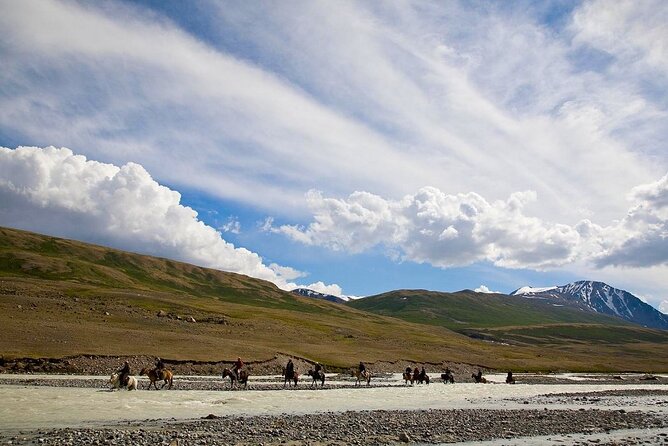
Day nine is the hardest mountain day for many people. You leave the gorge and climb toward a pass at roughly 10,350 feet, covering about seven miles over eight to nine hours. From the top, you look toward the Sheveet Uul gorge.
Weather can change the character of this day. If precipitation has fallen, part of the route may be covered by snow, and the group may need to clear a path. After the pass, you descend steeply on foot to camp in Sheveed Uul Gorge. Strong fitness is not a formality here. You need stamina and sure footing.
The next day moves downhill toward a small ger community of Tuvan people. Their traditional shamanistic beliefs add another cultural layer to a trip already shaped by Kazakh customs. At lunch, you stop to see petroglyphs scattered across the rocks near the Tsagaan Gol River.
The rock art is one of the route’s great surprises. Some images date back about 11,000 years, with later work continuing into the ninth century. These carvings connect the present-day nomadic world with people who used the same valleys thousands of years ago. You then descend into the river valley for two nights of camp, with glaciers and high peaks in view.
Day 11: A useful rest day by the river
A rest day in a demanding itinerary is not wasted time. You hike to a high plateau and a striking blue lake, then return to camp with time for laundry and rest.
This pause gives your legs a chance to recover before the glacier day. It also lets you enjoy the setting without measuring every hour by distance. On a trip with repeated six to nine-hour days, that breathing room can make the difference between feeling challenged and feeling worn out.
Day 12: Potanin Glacier and the high Tavn Bogd country
The approach to Potanin Glacier is a tough six to seven-hour trek over frost-heaved ground. You climb toward the glacier beneath Khuiten Peak, which rises to about 14,350 feet and is Mongolia’s highest point.
The area above the treeline is spare and severe. Alpine meadows give way to tundra, lichen-covered rocks, and high mountain swamps. Few animals tolerate these conditions, which helps explain the sense of isolation.
Nairamdal Peak marks the three-country border area shared by Mongolia, Russia, and China. You do not need technical climbing skills for the route described here, but the altitude and uneven ground still demand care. This is the trip’s clearest payoff for fit hikers who want a real mountain setting without joining a summit expedition.
Days 13 to 15: Leaving the mountains and returning home
Your last trail day heads north and east toward the national park ranger station. It is also your final chance to ride, including a faster run if conditions and your confidence allow it.
The crew unloads the camels and vehicles take you back toward Bayan Ulgii for a night at the ger camp. The drive is long, about six to seven hours, so this is a transition day rather than another major sightseeing stop.
On day fourteen, you fly roughly three hours back to Ulaanbaatar and spend the night at the Tuushin Hotel. A final evening in the capital gives you time for dinner and a last look at the city before your airport transfer on day fifteen.
The trip includes private transportation, and breakfast, lunch, and dinner are provided for 13 days. Your international flights to and from Mongolia are not included, so your total budget will be higher than the tour price alone.
Is $8,250 a fair price?
At $8,250 per person, this is an expensive journey. You are paying for more than guided walking: internal flights, private transport, a full expedition crew, camels, horses, camps, meals, cultural visits, riding instruction, and access to an extremely remote part of Mongolia.
The value depends on what you want. If you are seeking a low-cost way to see Mongolia, this is not it. If you want a carefully supported private expedition with both hiking and horseback options, the price is easier to justify. The fact that your own group takes part can also matter if you prefer a more personal pace.
The strongest value comes from the range of experiences packed into 15 days. You get Ulaanbaatar, Bayan Ulgii, eagle-hunting culture, ger visits, horse games, river trekking, ancient petroglyphs, a high pass, and Potanin Glacier. Few ordinary sightseeing programs combine those elements.
Who should book this trip?
I would recommend it to fit hikers, adventurous riders, families with strong older teenagers or adults, and people who want direct contact with nomadic communities rather than a string of standard hotels.
You do not need to arrive as an expert rider. The riding clinic helps, and the trip allows you to combine riding with walking. You do need to accept that horses are part of the working rhythm of the expedition, not simply a short photo stop.
I would hesitate to recommend it if you dislike long drives, shared camp routines, high elevations, sudden weather changes, or strenuous walking. The private format is appealing, but it does not make the mountains easier.
The available feedback gives particular weight to Eddie Frank’s leadership, the feeling of support between the Tusker and Kazakh crews, and the way the trip becomes a personal cultural exchange rather than only a trek. That is the clearest reason to choose this operator. You are not simply passing through western Mongolia. You are spending time with the people who live there and moving through their country at a human pace.
FAQ
Where does the Mongolia Nomad Trek begin?
The listed meeting point is Buyant Uhaa Airport in Ulaanbaatar, Mongolia, with a stated start time of 12:00 am. The trip begins with time in Ulaanbaatar before the westbound flight.
How long does the trip last?
The journey lasts approximately 15 days, ending with an airport transfer on day fifteen.
Is horseback riding required?
The itinerary combines walking and riding, but it allows you to hike, ride, or do both. Eddie Frank provides basic riding clinics, including instruction for people who are not experienced riders.
How physically fit should I be?
You should have a strong physical fitness level. Several trail days last six to nine hours, and the route includes steep climbs, high altitude, a mountain pass of about 10,350 feet, and uneven or snow-covered ground in some conditions.
What meals and transportation are included?
Private transportation is included, along with breakfast, lunch, and dinner for 13 days. Travel from your home country to Mongolia and back is not included.
Can I cancel for a full refund?
You can cancel at least 24 hours before the local start time for a full refund. If poor weather or an insufficient minimum group size forces cancellation, you are offered another date or experience, or a full refund.
Just added around Mongolia
- Full Day Chinggis Khaan Statue & Terelj NP Tour +Horseride, Eagle★ 5.0 · 7 reviews
- Chinggis Khan Equestrian Statue Complex & Terelj National Park -Private Day Tour★ 5.0 · 2 reviews
- 1 Day Semi-Gobi Tour with Lunch And Enjoying Camel or Horseback★ 5.0 · 9 reviews
- Full Day Private Tour in Terelj National Park with Horse Riding★ 5.0 · 13 reviews
- Horseback Riding Tour to Turtle Rock & Aryabal★ 5.0 · 3 reviews
- Terelj ,Khar khorum ,Horse ride , Camel ride , Monastery★ 5.0 · 3 reviews
- 2 Day Horse trekking in Terelj national park★ 4.3 · 5 reviews
- Horse riding in Terelj National Park★ 5.0 · 14 reviews
Ulaanbaatar Horseback Riding Tours, compared.
Terelj National Park: Tour with horse riding and hiking
Read our review →
MONGOLIAN NOMADS: 2-Day Horse Trekking & Cow Milking Tour
Read our review →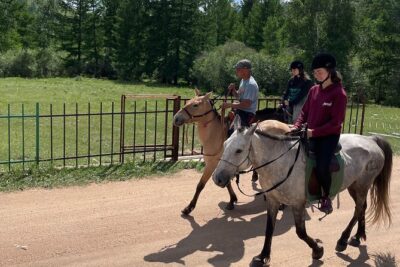
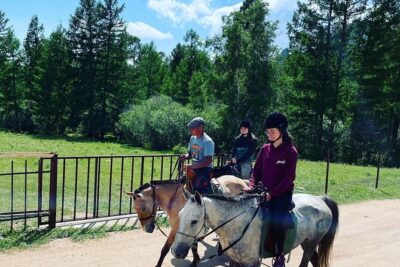
Full Day Private Tour in Terelj National Park with Horse Riding
Read our review →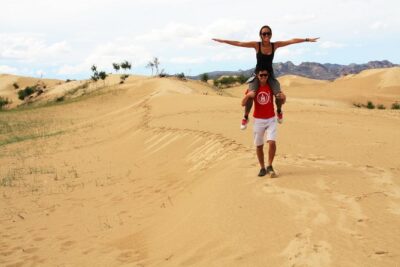
1 Day Semi-Gobi Tour with Lunch And Enjoying Camel or Horseback
Read our review →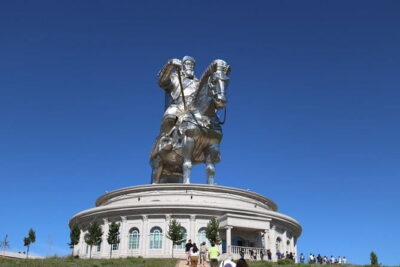
Full Day Chinggis Khaan Statue & Terelj NP Tour +Horseride, Eagle
Read our review →Browse the lists this tour appears in