
Review · BISHKEK
Horse Trek to Kel Suu Lake
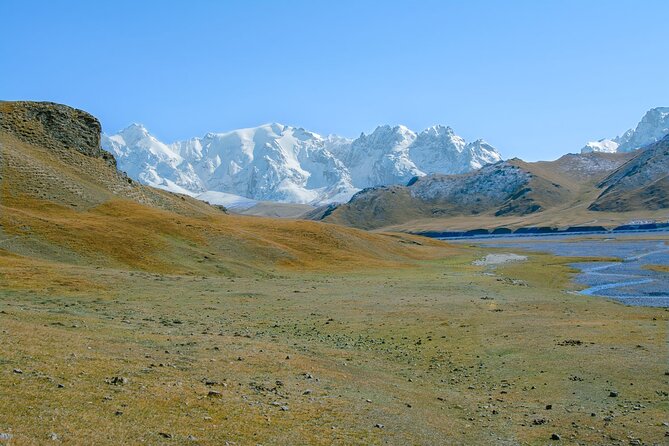
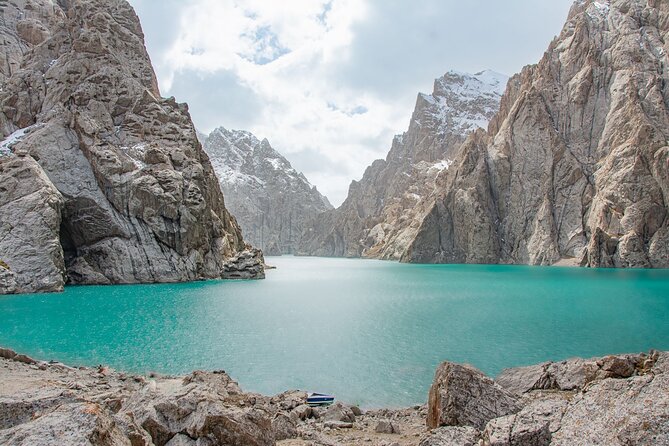
Kel-Suu Lake is the prize at the end of a serious mountain journey: turquoise water pressed between sheer cliffs, high passes, remote valleys, and very few signs of modern life. You spend six days moving between Bishkek, Naryn, Kok-Kiya Valley, and the lake by minibus and horse, with guide Sanjar, a horseman, and a driver handling the practical work.
I like the small maximum group of eight, which should make horse handling and border formalities easier. I also like the human side of the trip: meals, local hosts, traditional camps, and time with Kyrgyz herders make this more than a quick photo stop.
The main caution is the physical demand. You ride for up to six hours on some days, cross passes as high as 3,791 meters, and spend long hours in a vehicle on the first and final days. The $1,400 price is fair only if you want a guided, fully arranged mountain trip and are ready for basic conditions.
Key points to know before you book
- A 3,791-meter pass: The route crosses Car Pass, with steep mountain riding and large changes in altitude.
- Two very different travel modes: Expect long minibus journeys on Days 1, 2, and 6, then horse riding through Kok-Kiya Valley and toward Kel-Suu.
- Guide Sanjar leads the trip: The guide is repeatedly praised for his care, humor, passion, and practical help.
- A small group of up to eight: This suits riders who prefer personal attention over a large organized departure.
- Camping equipment is supplied: Tents, mats, cooking gear, gas, and border permits are included, but sleeping bags and helmets are not.
- The season is short: Departures are listed from July 1 through September 15, 2026, when high mountain access is most practical.
Why Kel-Suu is worth six demanding days
Kel-Suu is not an easy lake to reach, and that is the point. Its setting feels remote because it is remote, with high cliffs, cold mountain air, broad valleys, and a route that requires both road travel and horseback riding.
You are not simply driven to a viewpoint, given ten minutes for photographs, and returned to town. The approach takes shape over several days. First comes the road from Bishkek to Naryn. Then the route climbs toward the Kok-Kiya Valley, where the horse trek begins. By the time you reach Kel-Suu, you have crossed mountain country under your own effort.
The trip also offers a useful window into Kyrgyz life. Yurt camps, local hosts, horsemen, and shared meals are part of the experience. That matters because the best part of a mountain journey is often not the final view. It is the rhythm of getting there, meeting the people who know the route, and seeing how horses remain central to life in the high country.
More Horseback Riding Tours in Bishkek:
- 4 Days Issyk Kul & Chon Kemin with Nomadic Stay, Horse riding
★ 5.0 · 41 reviews - 3 Days Issyk Kul lake & Chon Kemin: Eagle show, horse riding
★ 5.0 · 33 reviews - 2-Days in Song Kul Lake as Nomad – horseback riding & Yurt stay
★ 5.0 · 33 reviews
Day 1: Bishkek to Naryn and the Burana Tower stop
You leave Bishkek after breakfast and drive about 315 kilometers toward Naryn. The day includes a stop at Burana Tower, an important historical site on the road east, followed by views of valleys and smaller Kyrgyz towns.
The driving time is listed at roughly six hours, so this is primarily a road day rather than a trekking day. That long transfer is necessary, but you should not mistake it for a gentle start. You will spend much of the day seated before the riding begins.
Naryn provides a useful change of pace from the capital. Your overnight stay is in a homestay, which gives you a more local setting than a standard chain hotel. Meals and lodging in Bishkek before or after the tour are not part of the mountain program, so check exactly what your own booking includes around the start and finish.
Day 2: Bosogo Pass and the broad Ak-Sai Valley
After about an hour on the road from Naryn, you climb the switchbacks of Bosogo Pass. The route then opens into the Ak-Sai Valley, surrounded by snow-capped peaks and wide, open mountain country.
The day covers about 140 kilometers by vehicle and takes roughly three hours according to the schedule. That leaves room for stops and for the mountain setting to change gradually. The road access is part of the adventure, but the rough and remote feel also means you should expect limited services once you leave Naryn.
This is the point at which the trip starts to feel far removed from ordinary sightseeing. Roads become a means of reaching the horse trails rather than the main event. If you want a tour with very little driving, this is not the right choice. If you want to see how quickly Kyrgyzstan changes from city outskirts to open mountain country, the transfer works well.
Day 3: Your first ride through Kok-Kiya Valley
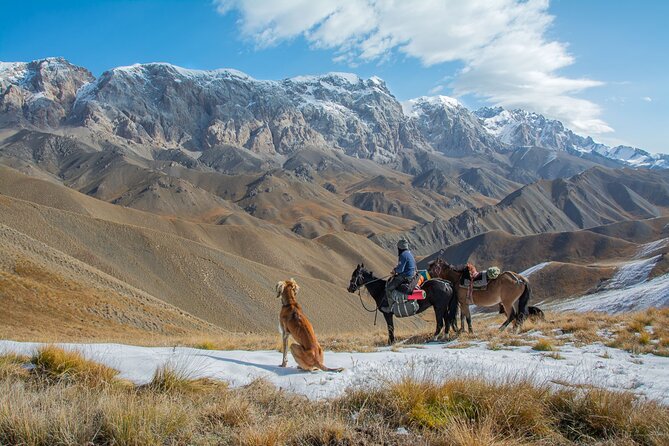
After breakfast, you meet your horse and receive a short riding briefing. The route covers about 13 kilometers, with a listed ascent of 514 meters and descent of 414 meters, and takes about six hours.
Do not let the distance make this sound easy. Mountain riding includes uneven trails, river crossings, climbs, and descents. Six hours in the saddle can feel long even when the daily mileage is modest, especially if you are new to riding or not used to changing terrain.
Kok-Kiya Valley is a fine place to begin because it gives you time to settle into the horse and the pace. You follow trails through a small valley, crossing rivers and winding between high slopes. The horseman is an important part of this day. You are not expected to manage every part of the route alone, but you do need to listen carefully and stay alert.
The short briefing is useful, though anyone with little riding experience should ask questions before setting out. Bring trousers that allow free movement, sturdy footwear, sun protection, and clothing for sudden changes in temperature. These are practical recommendations for a high mountain ride, not luxuries.
Same saddle, a different kind of ground:
- Horseback riding on the mountains of Chon Kemin National Park
★ 5.0 · 31 reviews - 1 Day Chon Kemin tour with Horse Riding
★ 5.0 · 28 reviews - A superb horse riding in Chon Kemin valley, 1 day
★ 5.0 · 27 reviews - 2 Days Issyk Kul Lake Canyons Horse Riding and Yurt Stay
★ 5.0 · 24 reviews
Day 4: Over Car Pass at 3,791 meters
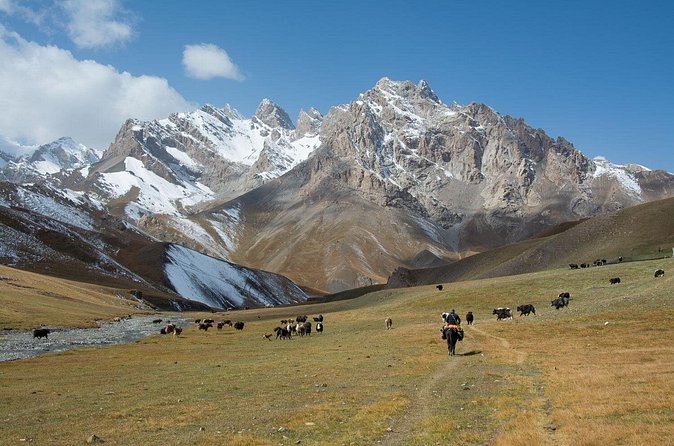
Day 4 is the most demanding riding day. You cover approximately 18 kilometers, with 470 meters of ascent and 488 meters of descent, while crossing Car Pass at 3,791 meters.
The reward is the view from the pass. From this height, you can look across a broad sweep of stark mountain country, with the route ahead laid out below. The high point gives the trip its sense of scale, but it also brings the clearest physical challenge.
Altitude affects people differently, and the tour asks for a moderate level of fitness. You should be comfortable spending six hours outdoors, climbing and descending on horseback, and coping with cold or changing weather. The information provided does not promise altitude acclimatization days, so take the pace seriously and tell Sanjar or the horseman if you feel unwell.
The descent can be as tiring as the climb. It is easy to focus on reaching the pass and forget that horses and riders still have several hours of uneven trail afterward. This is a day for patience, water, and steady attention rather than speed.
Day 5: Reaching the turquoise waters of Kel-Suu
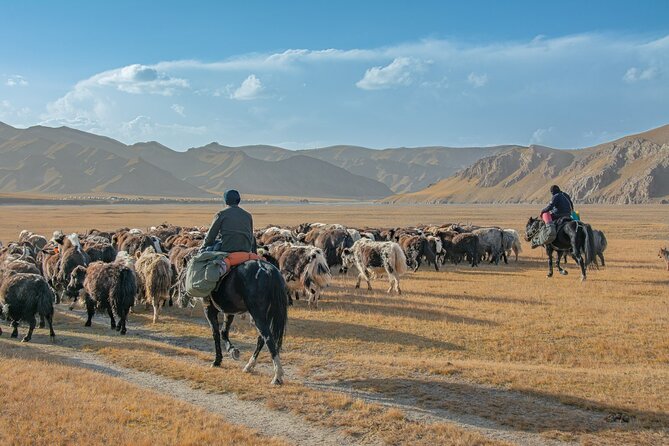
The final ride to Kel-Suu covers about 12 kilometers and takes three hours on horseback. The route includes another 180 meters of ascent and 261 meters of descent before the lake comes into view.
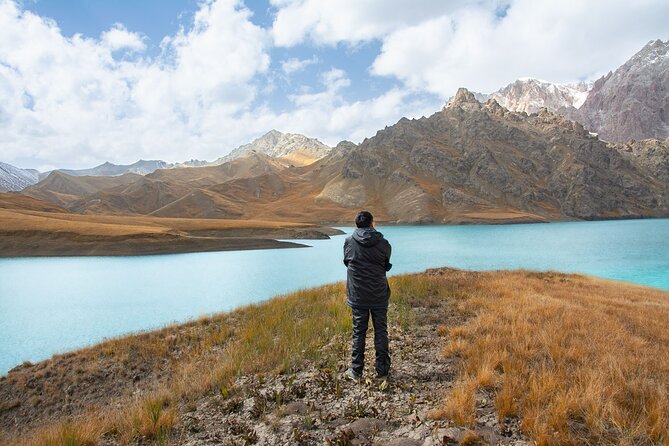
Kel-Suu is the visual payoff: turquoise water, steep cliffs, and a quiet setting that feels far removed from Bishkek. The lake is the sort of place where the best plan is to slow down. Give yourself time to look across the water, take photographs, and appreciate how much effort went into reaching the shore.
The schedule also lists 140 kilometers of driving on this day. That suggests the day may include a transfer connected with the lake area, but the supplied program does not explain exactly when that drive takes place or how it fits with the three-hour ride. Ask Visit Alay to clarify the day’s camp and vehicle arrangements before booking.
The trip overview refers to traditional yurt camps, while the included equipment list names a tent, mats, gas, and cooking dishes. That may simply reflect a mixed camping setup, but it is worth confirming whether you sleep in yurts, tents, or both. This is one of the few details that could affect your packing and comfort expectations.
Day 6: The long road back to Bishkek
After breakfast, you drive back to Bishkek, covering about 315 kilometers. The schedule allows scenic breaks and photographs, with arrival expected by early afternoon.
The return drive is not a small footnote. After several days of riding, you will probably be ready for a shower, a proper rest, and a slower evening. The stated driving time is about five hours, though road conditions and stops can affect the day.
The tour ends back at the starting point on Frunze Street. That is convenient if you have a hotel in Bishkek or onward plans from the city, but leave some flexibility around your evening rather than booking a tight connection.
What your $1,400 includes
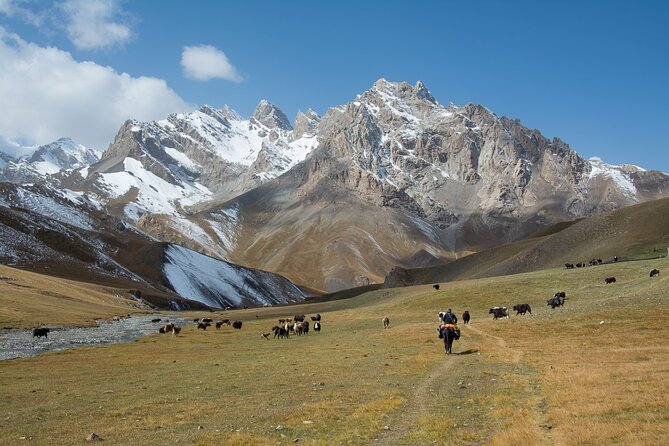
At $1,400 per person, this is not a budget excursion. The value comes from combining transport, horses, a horseman, a guide, meals, camping equipment, and a border permit in one difficult-to-arrange journey.
Included items are:
- Transport to and from Bishkek
- Horses and horseman
- A tent, mats, gas, and cooking dishes
- Border permit
- Meals for the tour staff
- Five breakfasts
- Five lunches
- Five dinners
The package removes several headaches. You do not need to arrange separate transport to Naryn, locate horses in the Kok-Kiya Valley, or manage the border permit yourself. A small group also spreads the cost of the driver, guide, horseman, and vehicle without making the trip feel crowded.
Still, the price does not cover everything. Personal spending, bottled water, alcoholic drinks, coffee, and soda are extra. Insurance is not included, and neither are sleeping bags or helmets. Those last two omissions matter most. You should arrange suitable travel insurance and ask what sleeping bag temperature rating is appropriate for the dates you choose.
The meals are included, but the supplied details do not describe the menus. If you have dietary needs, raise them before departure rather than assuming the remote camps can adapt easily.
The people who shape the experience
Sanjar is the main name to know. He leads the group and is praised for combining humor, care, passion, and practical knowledge of the route. That combination matters on a horse trek. A guide needs to explain the setting, but also notice when someone is tired, nervous, or struggling with the altitude.
Milran is identified as the driver and is praised for being friendly and dependable. The horseman completes the local team. Together, these roles give you support across the whole journey: road transfers, riding, meals, camps, and the border crossing.
The small group limit of eight is another real advantage. You will have a better chance to ask questions, get help mounting or managing your horse, and move at a sensible group pace. It also means you should expect a shared experience rather than a private one.
Who should book this horse trek?
I would choose this trip if you want Kyrgyzstan through movement, scenery, and local contact rather than a string of city hotels. It suits a reasonably fit person who enjoys horses, accepts basic camping conditions, and sees long road transfers as part of the story.
You should think twice if you dislike riding for several hours, have no interest in remote mountain conditions, or need guaranteed hotel comfort each night. The route has a moderate fitness requirement, but the combination of altitude, uneven trails, and long days can still be demanding.
This is also a better fit for someone who values a guide-led experience. You are paying to have the route, transport, horses, food, and permits organized. Independent planning might cost less, but it would require far more work in a remote part of Kyrgyzstan.
Practical details to settle before departure
Pickup is offered, and the stated meeting point is 573 Frunze Street in Bishkek. The activity ends at the same meeting point. Confirmation is provided at booking, and the tour is listed as operating daily from July 1 through September 15, 2026, with opening hours shown as 9:00 AM to 8:00 PM.
Free cancellation is available up to 24 hours before the start time for a full refund. Changes or cancellations inside that window are not accepted for a refund. The trip depends on suitable weather and a minimum number of participants. If poor weather or insufficient bookings cause cancellation, you are offered another date, another experience, or a full refund.
I would ask four questions before paying:
- Will I sleep in yurts, tents, or a mix of both?
- What sleeping bag should I bring for the chosen dates?
- How is the 140-kilometer drive on Day 5 arranged around the lake ride?
- What riding experience and helmet arrangements does the operator recommend?
Those questions do not diminish the appeal of the trip. They simply turn an exciting plan into a realistic one.
Should you book the Kel-Suu horse trek?
Book it if the image of reaching a remote turquoise lake on horseback excites you more than the thought of six days of comfort and convenience. The route offers striking mountain views, a genuine connection with Kyrgyz horse culture, a small group, and a well-supported team led by Sanjar.
At $1,400, the tour is best viewed as a complete expedition package rather than a cheap day ride. You pay for the long transfers, horses, staff, meals, permit, and access to a difficult-to-reach part of the country. Bring your own sleeping bag, arrange insurance, prepare for altitude, and confirm the camping details.
If you can accept those conditions, Kel-Suu offers the kind of journey that stays with you because the lake is only part of the reward. The valleys, passes, horses, hosts, and long road into the mountains all belong to the experience.
FAQ
How long is the Horse Trek to Kel-Suu Lake?
The experience lasts approximately six days, beginning and ending in Bishkek.
Where does the tour start and finish?
It starts at 573 Frunze Street in Bishkek and ends back at the same meeting point.
How many people can join the tour?
The maximum group size is eight people.
What riding distances are included?
Day 3 covers about 13 kilometers by horse, Day 4 about 18 kilometers, and Day 5 about 12 kilometers. Riding time is listed as six hours on Days 3 and 4, and three hours on Day 5.
What is the highest point on the route?
The route crosses Car Pass at 3,791 meters.
Are horses and riding support included?
Yes. Horses and a horseman are included, along with transport from and to Bishkek.
Are meals included?
Yes. Five breakfasts, five lunches, and five dinners are included.
Do I need to bring a sleeping bag and helmet?
Yes. Sleeping bags and helmets are not included, so you need to arrange them yourself. Insurance is also not included.
Just added around Bishkek
- From Bishkek Horse Riding in Arashan Mountains★ 5.0 · 4 reviews
- Chunkurchak Day Tour: Sky Bridge, Horse Riding and Archery★ 5.0 · 14 reviews
- Year-Round Adventure: 3 Days Horse Trek to Song Kul Lake★ 5.0 · 16 reviews
- Scenic Horse Riding tour to Chon Kemin Valley★ 5.0 · 3 reviews
- A superb horse riding in Chon Kemin valley, 1 day★ 5.0 · 27 reviews
- 2 Days Issyk Kul Lake Canyons Horse Riding and Yurt Stay★ 5.0 · 24 reviews
- 2-Day Adventure: Horseback Riding, Konorchek Canyons & Yurt Stay★ 5.0 · 2 reviews
- 4 Days Issyk Kul & Chon Kemin: Horse Riding and Nomadic Yurt Stay★ 5.0 · 4 reviews
Bishkek Horseback Riding Tours, compared.
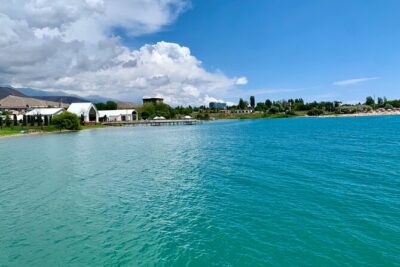
4 Days Issyk Kul & Chon Kemin with Nomadic Stay, Horse riding
Read our review →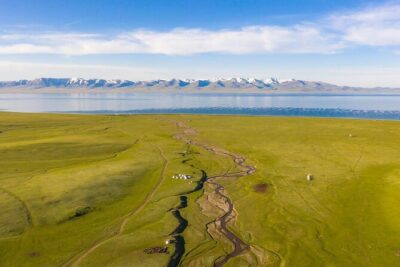
2-Days in Song Kul Lake as Nomad – horseback riding & Yurt stay
Read our review →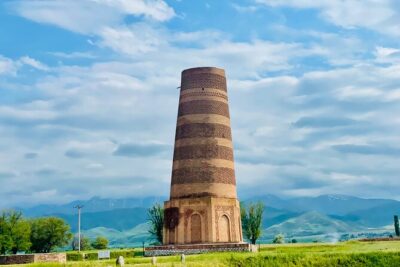
3 Days Issyk Kul lake & Chon Kemin: Eagle show, horse riding
Read our review →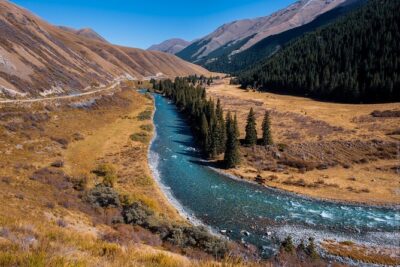
Horseback riding on the mountains of Chon Kemin National Park
Read our review →
A superb horse riding in Chon Kemin valley, 1 day
Read our review →
2 Days Issyk Kul Lake Canyons Horse Riding and Yurt Stay
Read our review →
Year-Round Adventure: 3 Days Horse Trek to Song Kul Lake
Read our review →Browse the lists this tour appears in