
Review · BANFF
Banff National Park: 2-Hour Sundance Loop Horseback Ride
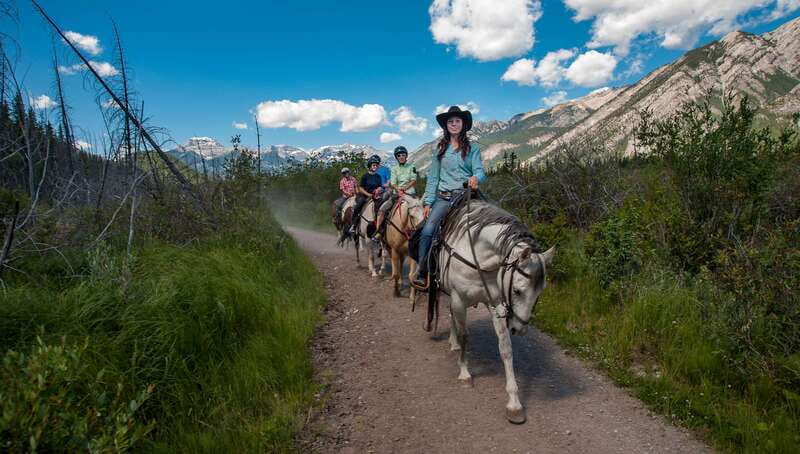
Banff looks different from horseback. From Warner Stables, you follow the Bow River, pass the Cave and Basin area, and enter marsh and forest where walking can be awkward. Your horse handles the uneven ground while you watch the mountains open up around you. At Windy Knoll, the reward is a wide view across the Bow Valley.
I like the calm, well-cared-for horses and the patient instruction, especially if this is your first ride. I also like the mix of riverbank, marsh, woods, and mountain trail rather than one repeated view. The main drawback is that much of the route passes through trees, so the best scenery comes in bursts, and the ride can leave you sore the next day.
Key points to know before you book
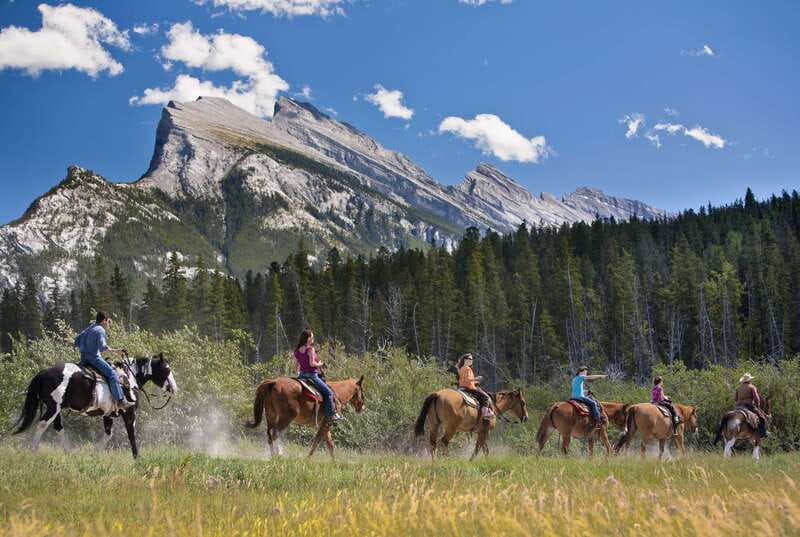
- The route mixes four kinds of terrain: Bow River, marsh, forest, and the Sulphur Mountain slopes.
- Windy Knoll is the main photo stop, with sweeping views over the Bow Valley.
- Beginners are welcome, but every rider must control their own horse and understand fluent English.
- The horses are already tacked up, helping the group leave on time after the safety briefing.
- Children ride their own horses, and the minimum age is eight.
- You need long pants and closed shoes, and backpacks cannot come on the trail.
Starting at Warner Stables on Sundance Road
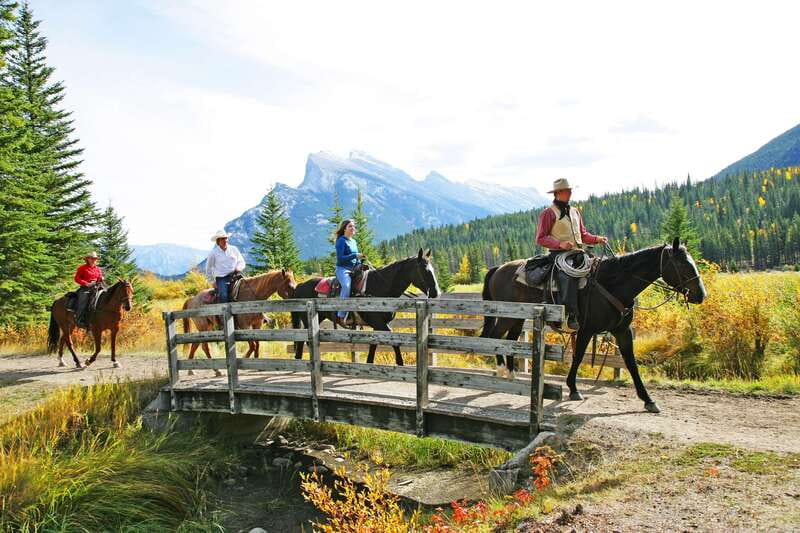
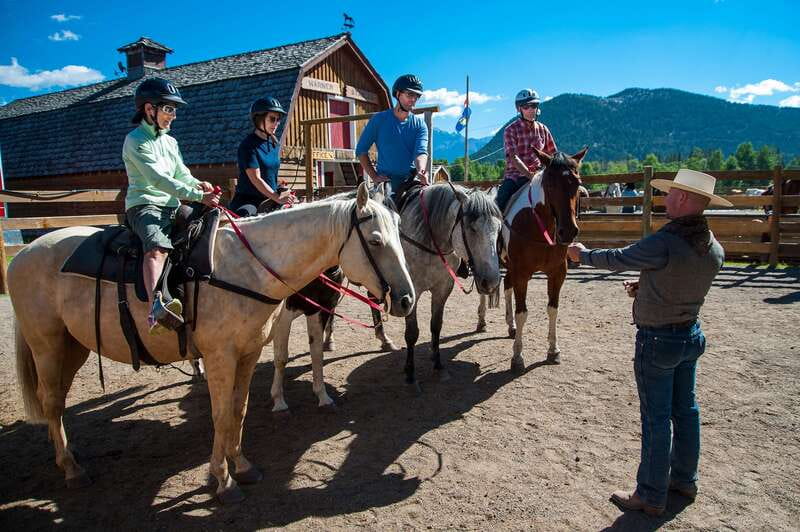
Your ride begins at the big red Warner Stables at the end of Sundance Road in Banff. Check in at the office in the east barn, where signs point to Warner Stables and office. Parking is free, which makes this easier than an activity that requires a separate shuttle or downtown transfer.
Arrive 30 minutes before departure. That buffer is not wasted time. You need to check in, complete the waiver, receive basic instruction, and get fitted with a helmet. The staff takes the safety briefing seriously, and late arrivals can miss the ride entirely with no refund.
The horses are prepared before you arrive, so there is no long wait while a large group is saddled. That keeps the start orderly. You should still expect a little standing around as the guides match riders with horses and explain how to hold the reins, stop, turn, and sit securely.
The ride includes lead and tail guides. That matters on a trail where the group stretches out between trees, hills, and open ground. The front guide sets the pace, while the guide at the back helps keep the line together and watches for riders who need extra help.
More National Park Trips in the world:
- Horseback Ride Tour to Natural Pool in Arikok National Park
★ 5.0 · 1,147 reviews - Banff National Park: 1-Hour Bow River Horseback Ride
★ 4.6 · 518 reviews - Banff National Park: 1-Hour Spray River Horseback Ride
★ 4.7 · 315 reviews
Getting comfortable with your horse
You do not need advanced riding experience, but this is not a ride where you simply sit and let the horse do everything. Each rider must be physically able to control the horse without assistance. You also need to speak and understand fluent English, since instructions are part of the safety system.
The staff begins with the basics and explains how to bond with your horse. The tone is practical rather than formal. You learn how to use the reins and how your body position affects the horse. For a first-time rider, those few minutes can make the difference between feeling tense and enjoying the scenery.
The horses are described as calm and individually minded, with their own personalities. That is worth remembering. One horse may want to drift toward the edge of the trail, while another may need a firmer cue to keep moving. A guide can help you respond, but you must stay engaged.
Children must ride their own horses. They are not paired with an adult, and anyone under 18 needs a parent or legal guardian present and a completed waiver. The age minimum is eight, so this suits older children who can listen, balance, and manage a horse independently.
Along the Bow River and past Cave and Basin
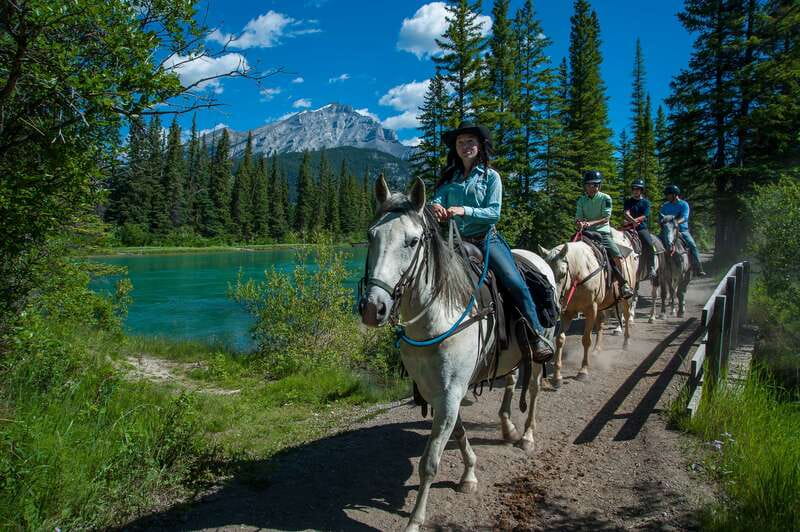
Once the group leaves the stables, the route heads toward the Bow River. The river section is one of the most pleasant parts of the ride. The current moves slowly, and you get a low, quiet view of the water that is very different from a roadside lookout.
The pace is generally a walking pace, which gives you time to listen to the guide and watch the river corridor. Guides explain area plants and wildlife, and you may spot animals that are harder to notice while walking in a larger, faster-moving group. Wildlife is never guaranteed, so come for the setting and the chance to see something, not for a promised sighting.
The route passes natural sulphur hot springs on the way to the Cave and Basin area, one of Banff’s national historic sites. This adds a layer of local character to the ride. You are not just circling through generic woods. The trail connects the river, the springs, and the place tied to the creation of Canada’s first national park.
You should not expect a long visit inside a museum or a detailed site tour. The emphasis is on riding through the area, with the guide providing context as you go. That works well for people who want a moving outdoor activity rather than a stop-and-start sightseeing tour.
Marsh, forest, and the quiet middle of the ride
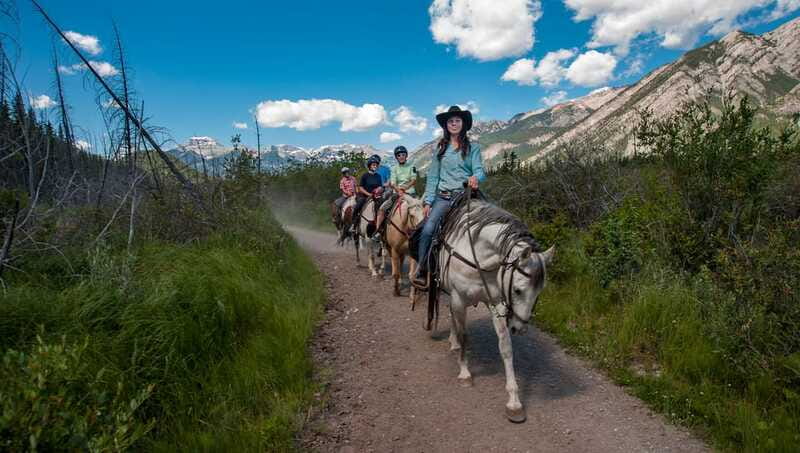
The route then presses through marshy ground that can be difficult to cross on foot. From a horse, you sit above the reeds and uneven surfaces, while the animal picks its way along the trail. This is one of the more distinctive parts of the experience because it shows you a section of Banff that is not as easy to reach on a casual walk.
After the open river and marsh sections, the trail enters thicker forest. This is where the scenery becomes more enclosed. You will see fewer broad mountain views, but the woods provide shade and a stronger sense of being away from roads and buildings.
Set your expectations correctly. If you want uninterrupted mountain panoramas, this is not the ideal route. The forest can feel long to riders who came mainly for photographs, and one rider specifically wished for fewer hills and less time in the trees. I see that as a fair tradeoff: the woodland portion gives the route variety and shelter, but the views arrive in intervals rather than continuously.
The guides help keep this part interesting with information about local plant life and wildlife. They also share stories about the area and the horses. Guides such as Sophie, Angela, Nicole, Iona, and Hannah have been praised for being friendly, helpful, and good at explaining both the animals and the trail. Guide assignments can change, so do not book based on a specific person being present.
More Two-Hour Trips in the world:
- Agadir and Taghazout: 2-Hour Horseback Ride on the Beach
★ 4.6 · 888 reviews - 2-Hour Horseback Riding through Red Rock Canyon
★ 5.0 · 838 reviews - 2 Hour Monument Valley Horseback Tour
★ 4.5 · 458 reviews - The Best Horse Riding Experience in Gran Canaria (2 hours)
★ 4.5 · 349 reviews
Climbing Sulphur Mountain to Windy Knoll
The route eventually turns uphill toward Sulphur Mountain. The horses climb slopes that would require more effort and careful footing on foot. You still need to stay balanced and follow instructions, but the horse does the hard work of the ascent.
The climb gives the ride a sense of progress. You begin beside the river, pass through wet ground and forest, then gain height for a broader view. It is not a mountain expedition, but the uphill section makes the two-hour route feel like more than a short trail circle.
Windy Knoll is the key viewpoint. Here, you can take photos of the Bow Valley and the surrounding mountains. The open view is a welcome change after the forest, and it gives you the clearest sense of the setting you have been moving through.
Taking photos from horseback takes some thought. You need one hand for the reins, so a phone or camera can be awkward to manage while the horse is moving. Keep your device secure and follow the guide’s instructions. The staff may help with a photo when you are mounted or getting off, but you should not expect a long, formal photo session.
This is also the point where the route delivers its best visual payoff. If photographs are your main reason for booking, Windy Knoll matters more than the wooded stretches. If you prefer a steady outdoor experience, the changing terrain may be just as valuable as the viewpoint.
What the pace and guides are really like
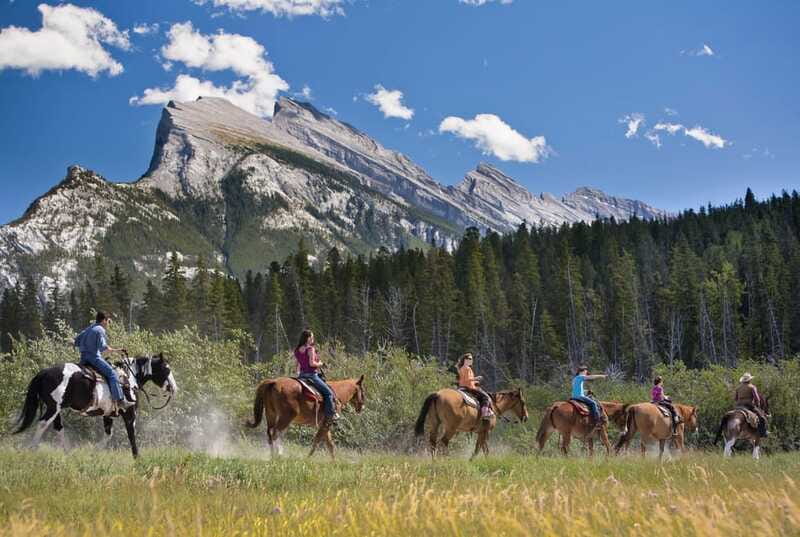
The ride is designed for a mixed group, including beginners. Do not expect a fast western-style gallop. The route is a guided trail ride, and the focus is control, safety, scenery, and keeping the horses comfortable.
One previous rider wished for a trot. That is useful to know if you already ride and want more action. The supplied details do not promise trotting, and you should book this as a scenic walking ride rather than a lesson in faster riding.
The guides are a major part of the experience. They teach beginners, answer questions, explain the geography, and manage the group when a horse needs correction. The strongest praise centers on their patience, humor, and affection for the animals. That human care also shows in the response to problems. When one young rider had an unexpected allergic reaction and a horse tried to leave the trail, the guides helped calmly and quickly.
The horses are another high point. They are described as calm, well treated, and full of distinct personalities. That does not mean every rider will bond instantly with every horse. It does mean the stable culture appears to take the animals seriously, which is important when you are trusting a horse on uneven ground.
Is $152 a fair price for two hours?
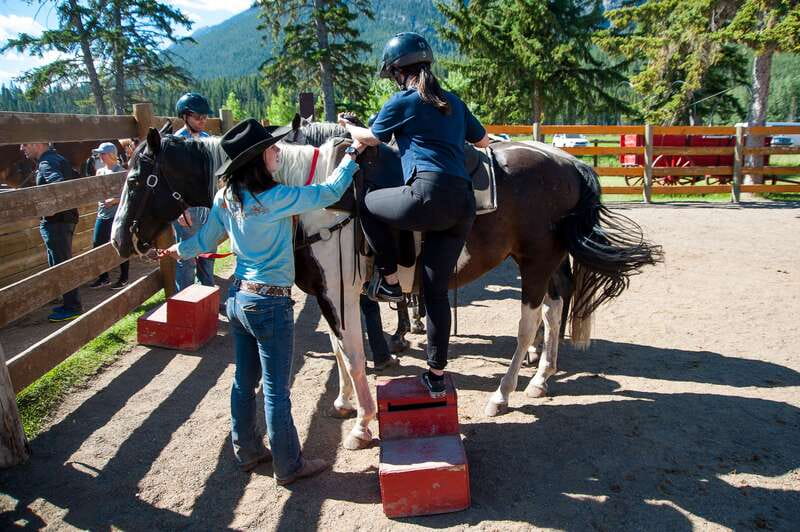
At $152 per person, this is not a cheap way to spend two hours in Banff. The price makes more sense when you count what is included: the horse, helmet, basic instruction, a lead guide, a tail guide, parking, and a guided route through several types of terrain.
You are also paying for access to places that are less convenient on foot, plus the staff needed to manage a group of riders and horses safely. The value is strongest for first-time riders, families with children old enough to ride independently, and people who want a structured way to see the Bow River and nearby foothills.
The value is weaker if you already ride regularly and mainly want a fast, technical, or private horseback experience. It is also weaker if your priority is nonstop mountain scenery. Much of the route is wooded, and the ride stays at a controlled pace.
There is no food or drink included, and there is no hotel pickup or drop-off. Plan your own transport to Warner Stables and eat beforehand or afterward. Free parking helps offset the lack of transport, especially if you have a rental car.
What to wear and what to leave behind
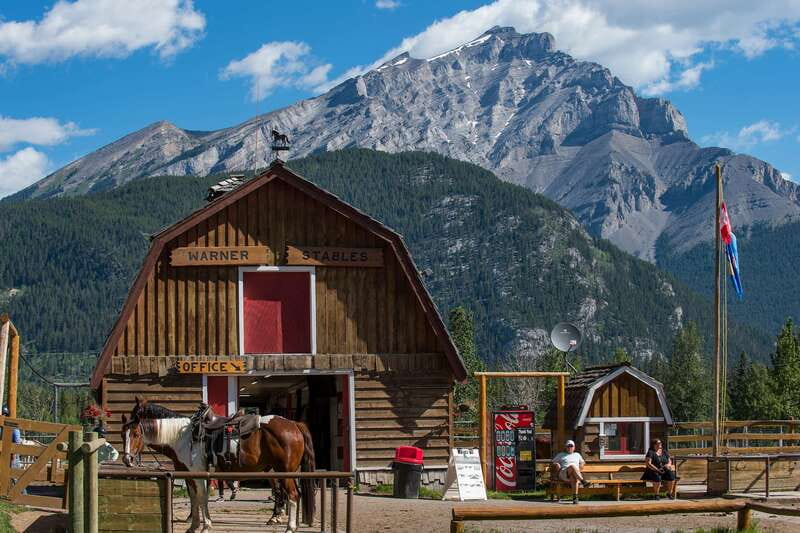
Wear long pants. They protect your legs from rubbing against the saddle and brush along the trail. Closed-toe shoes are required, and practical footwear is a better choice than sandals or loose shoes.
Bring insect repellent, especially for the marsh and forest sections. The tour does not allow backpacks, so do not arrive expecting to carry a large camera bag, water pack, or extra layers on the horse.
You should also dress for changing conditions in the mountains. The supplied instructions specifically call for long pants and insect repellent, but a light layer is sensible if the day is cool. Keep anything you bring small and secure because you will have limited use of your hands while riding.
The ride is not suitable for pregnant people or anyone over 230 pounds, or 104 kilograms. The weight limit is strict, and exceeding it can mean forfeiting the booking without a refund. Missed departures and no-shows are also nonrefundable.
Who will enjoy this Banff horseback ride?
I would choose this for a first horseback ride in Banff, especially if you want scenery with a bit of instruction. The two-hour length is long enough to feel like a real outing but short enough for someone unsure about spending half a day in the saddle.
It suits families with children eight and older who can ride their own horses and follow English instructions. It also works well for couples and honeymooners looking for a quieter outdoor activity. The route offers enough variety for people who like nature, photographs, and local stories more than speed.
You may want another activity if you dislike hills, wooded trails, or a slow pace. The route includes uphill ground and stretches where trees limit the view. You should also think twice if you are physically uncomfortable on horseback, since one rider reported soreness the next day.
Free cancellation up to 24 hours before departure gives you some flexibility. Reserve and pay later is also available, but read the age, weight, waiver, and arrival rules carefully before booking.
Should you book the Sundance Loop ride?
Book it if you want to see Banff from a horse, learn the basics in a supportive setting, and move through river, marsh, forest, and mountain terrain in one outing. The strongest reasons to go are the calm horses, attentive guides, and Windy Knoll viewpoint.
Skip it if you want a fast ride, constant open views, or a completely hands-off experience. You must control your own horse, arrive early, wear the right clothing, and accept that the most scenic sections are balanced by wooded trail.
For most suitable riders, this is a well-rounded way to spend two hours outside Banff. It feels more personal than a viewpoint stop and less demanding than a full-day horse trip. At $152, it is a special-occasion activity, but the instruction, staff support, horses, and route give the price a reasonable foundation.
FAQ
Where does the horseback ride begin?
The ride begins at Warner Stables, 1 Sundance Road, Banff, Alberta. Meet at the big red stables at the end of Sundance Road and check in at the office in the east barn.
How early should I arrive?
Arrive 30 minutes before your scheduled departure. You need time for check-in, the waiver, safety instructions, helmet fitting, and basic riding guidance.
How long is the tour?
The horseback ride lasts two hours. Starting times vary, so check availability when booking.
What is included in the price?
The tour includes the two-hour horseback ride, an English-speaking guide, lead and tail guides, basic horseback riding instruction, a helmet, and parking.
Is hotel pickup included?
No. Hotel pickup and drop-off are not included. You must make your own way to Warner Stables.
What should I wear and bring?
Wear long pants and closed-toe shoes. Bring insect repellent. Backpacks are not allowed on the ride.
What is the minimum age?
The minimum age is eight. Children must ride their own horses, and anyone aged 17 or younger must be accompanied by a parent or legal guardian.
Is horseback riding experience required?
Basic instruction is provided, so beginners can take part. However, each rider must be able to control the horse without assistance and understand fluent English.
Can I cancel the booking?
You can cancel up to 24 hours before the tour for a full refund. Missed departures, no-shows, and unused services are nonrefundable.
Just added around the world
- Zihuatanejo: Horseback Riding on the Beach★ 5.0 · 7 reviews
- Horseback riding at sunrise 3h★ 5.0 · 35 reviews
- Horseback riding with private transfer★ 5.0 · 23 reviews
- Tulum Adventure: Horses + ATV + Cenote + Zipline + Lunch★ 4.5 · 8 reviews
- From Ubud 1 Hour Horse Riding at The Beach Experiences★ 5.0 · 9 reviews
- 1 hour bali horse riding & Swim at the beach★ 3.5 · 4 reviews
- Horse riding in Terelj National Park★ 5.0 · 14 reviews
- Half-Day Tour: Terracotta Warriors and Horses Museum★ 5.0 · 7 reviews
National Parks, compared.
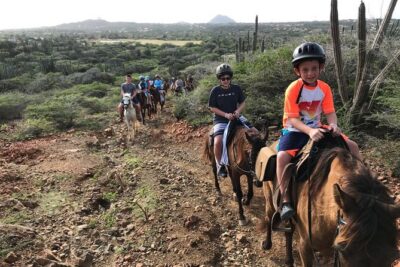
Horseback Ride Tour to Natural Pool in Arikok National Park
Read our review →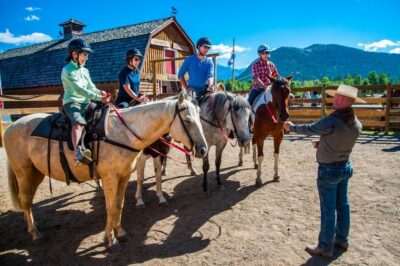
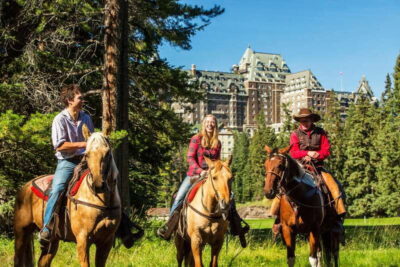
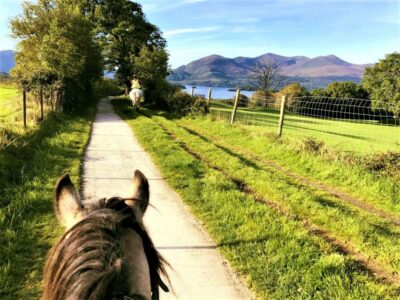
Kerry: Guided Horse Riding Tour in Killarney National Park
Read our review →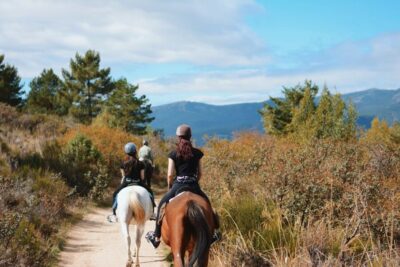
Horse Riding in Sierra del Guadarrama National Park
Read our review →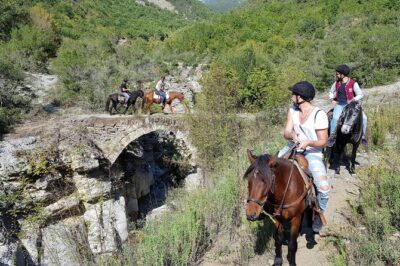
Amazing Horse Riding Experience at Vjosa National Park in Permet
Read our review →
Browse the lists this tour appears in