Review · HORSEBACK RIDING TOURS
Pokhara: Horseback Riding Adventure with Hotel Pickup
Pokhara’s horseback ride can take you from the Lakeside area into quiet forest trails and up toward broad mountain views. The route is not always a gentle lakeside trot, so ask exactly where your ride will go before mounting. Some departures circle the lake, while others make a steady climb into the hills.
I like the private-group format, which gives you room to ask for route advice and adjust your outing to your riding ability. I also like the patient local guiding, hotel pickup, and well-trained horses. The main concern is heat and hills: one outing became a hard uphill trek in temperatures above 33 C, and the horses struggled.
Key points to know before booking
- The route can change: Some rides go around the lake, while others climb into the hills.
- The mountain view is a reward: Clear weather can reveal a striking line of peaks from higher ground.
- Pickup is arranged in Lakeside: The listed meeting area is Lakeside Road 6, with pickup and return in the Lakeside area.
- Expect a real riding outing: This is not guaranteed to be a flat, slow ride beside the water.
- Weight and horse welfare matter: One rider advised choosing the lake route instead of the hill route above 90 kilograms.
- The price is $32: For 2.5 hours with a guide, horse, gear, pickup, and a private group, that is fair if the route suits you.
What the $32 ride actually gives you
At $32 per person, this is priced as an accessible half-day-style activity rather than a luxury horseback excursion. The outing lasts 2.5 hours and includes a professional local guide, a trained horse, safety equipment, forest and trail riding, scenic viewpoints, and pickup from the Pokhara Lakeside area.
That package has useful value. You do not need to arrange your own transport to the stable or trailhead, and you have a guide beside you for the ride. The private-group setup is especially helpful if you are new to horses, want a slower pace, or need to discuss the route before leaving.
Food, drinks, personal expenses, insurance, and emergency rescue are not included. Bring water and budget for any refreshment stop. One rider reported paying twice the usual menu price for drinks at a hilltop stop, so I would ask the guide about prices before ordering.
The price becomes less attractive if you expect a polished riding-school experience, a guaranteed lakeside route, or a long stretch of open galloping. The supplied details describe scenic riding and a rhythmic pace, but they do not promise a particular speed. In Nepal’s uneven countryside, the ride may involve walking the horse or walking beside it on steep sections.
More Horseback Riding Tours in the world:
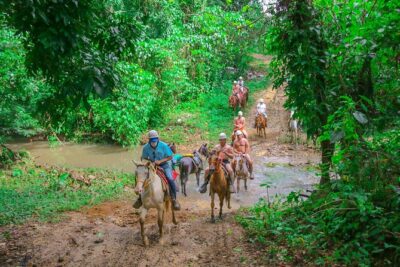
- Punta Cana Zipline Adventure with Buggies and Horseback Riding
★ 5.0 · 5,001 reviews - Luquillo Beach Horse Ride from Carabalí Rainforest Adventure Park
★ 5.0 · 4,762 reviews - Reykjavik: Red Lava Horse Riding Tour
★ 4.8 · 2,383 reviews
Pickup from Lakeside Road 6
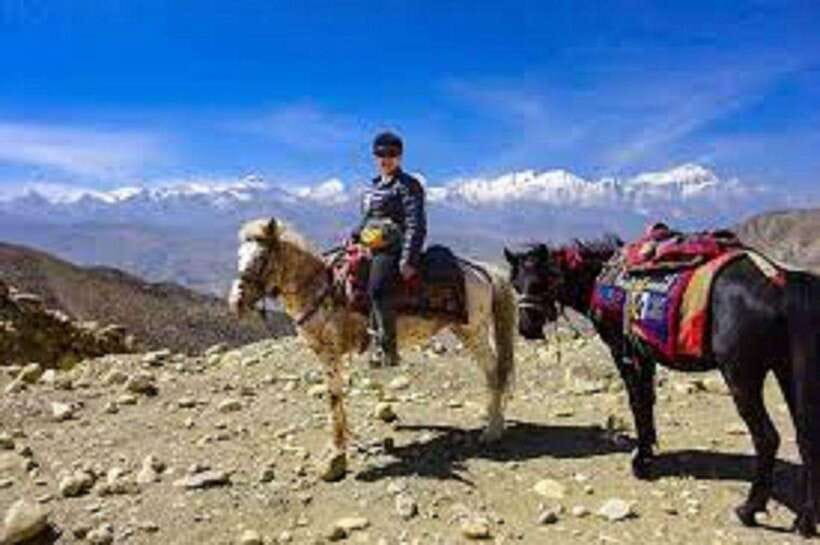
The practical base for this activity is Pokhara’s Lakeside area, with Lakeside Road 6 given as the pickup and drop-off point. The service is arranged as hotel pickup, although the exact vehicle can vary. On one outing, pickup took place by motorcycle rather than a car, so keep your belongings secure and ask about the pickup method when confirming.
The operator offers two pickup location options within the Pokhara Lakeside area and returns you to one of the same general locations. That keeps the logistics simple if you are staying near the lake.
Be ready at the agreed time. One rider found the guide arrived about ten minutes early, which is useful but means you should not plan to rush down from breakfast at the last minute. Wear comfortable clothes and shoes that can handle dirt, uneven paths, and contact with a stirrup. Tie back long hair, and bring a camera if you want photographs from the higher viewpoints.
You should also carry a copy of your passport or an identification card. Travel insurance is requested, and it is worth taking seriously because emergency rescue is excluded from the price.
Safety briefing and choosing the right horse
The ride begins with a safety briefing and an introduction to the horse. The horses are described as trained for riders at different skill levels, and a professional local guide stays with the group. That makes the experience accessible to someone who has ridden before but does not want to manage an unfamiliar route alone.
Still, all skill levels does not mean all physical conditions. The activity is not suitable for pregnant women, wheelchair users, or people with a low level of fitness. Uphill riding requires balance, leg strength, and comfort with a horse moving over uneven ground.
Speak plainly with the guide about your experience before the ride starts. Tell the guide if you are nervous, have not ridden for years, or prefer a gentle route. The activity is a private group, so route discussion should be easier than it would be with a large mixed party.
Horse welfare is an important part of the decision. A horse became very tired during one hot, steep outing, and the riders chose to walk the horses for much of the route. Another horse collapsed during the return in extreme heat. This does not mean every ride has the same problem, but it does show why you should ask about the day’s temperature, the hill route, and the horses’ condition before setting off.
If the horses are laboring, insist on a rest or walking section. A good horseback experience is not about forcing a horse up a hill to preserve a schedule.
Around the lake or up into the hills
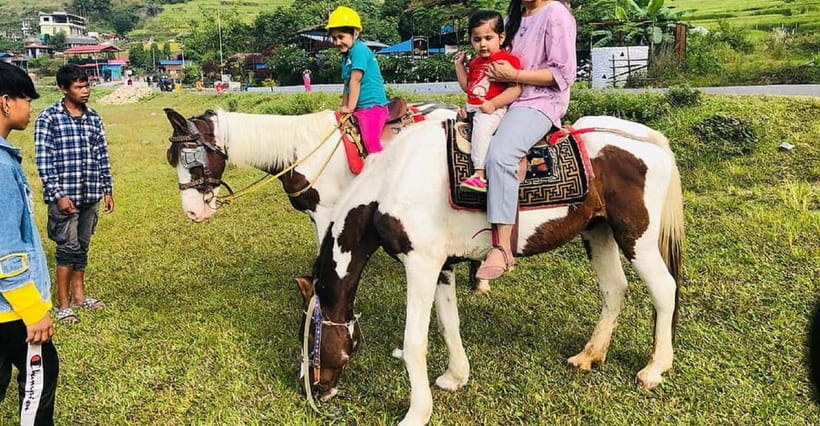
The most important question to ask is simple: Which route are we taking today?
The supplied description presents forest paths and peaceful trails around a tranquil lake. One rider had a calm ride around the lake and found it a pleasant way to see Pokhara. That route should suit riders who want scenery, a less demanding outing, or a first experience on horseback.
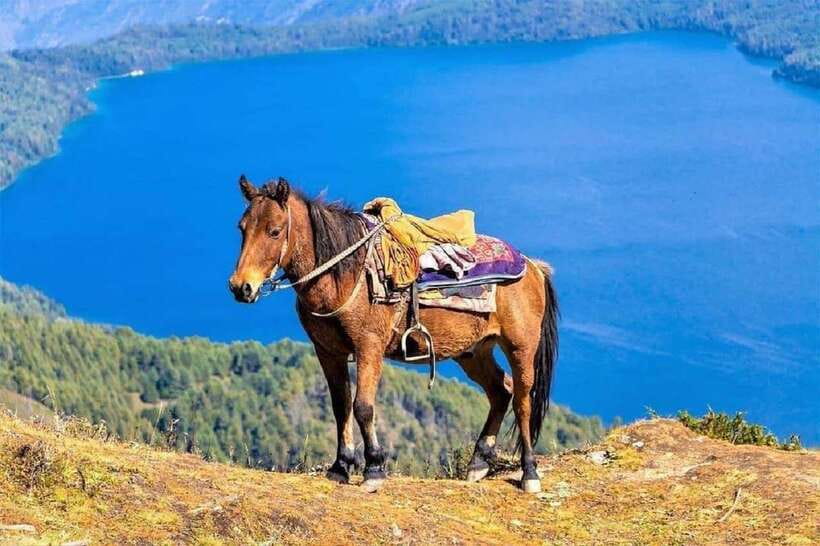
Other rides have gone uphill into the surrounding hills. The climb can offer a better view toward the mountain chain, especially in clear weather. One rider described the view from the top as excellent, while another praised the scenic setting and peaceful pace. The higher route can feel more like a small mountain outing than a lakeside activity.
The drawback is that the route descriptions do not clearly guarantee one option. A rider expecting flat forest and lakeside paths instead found a constant uphill trek. That mismatch mattered more than the guide’s attitude or the general scenery.
I would confirm three details before you leave:
- Is the ride around the lake or into the hills?
- How steep is the route?
- Can the ride be changed to the lake route if the day is especially hot?
If you are above 90 kilograms, one rider specifically advised choosing the lake route rather than the hill route because the horses may struggle with the climb and weight. That is practical advice, not a criticism of the rider or horse. Route selection should protect both.
Same saddle, a different kind of ground:
- Hurghada: Red Sea & Desert Horse Riding Tour with Swimming
★ 4.8 · 2,198 reviews - El Salobre: Horse Riding Adventure with Transfer Options
★ 4.5 · 2,034 reviews - Half-Day Thoroughbred Horse Farm Tour in Kentucky
★ 5.0 · 1,924 reviews - Cappadocia: Horseback Riding Adventure Tour
★ 5.0 · 1,881 reviews
Forest trails, hoofbeats, and the view from above
The forest section is the quiet heart of the experience. Sunlight filters through the trees, and the pace is shaped by the horse rather than by a hurried sightseeing schedule. You get a different view of Pokhara here, one focused on paths, trees, sounds, and the steady movement of the animal beneath you.
The ride may include a photo stop and short breaks. These pauses are useful because they give you time to take pictures without trying to handle a camera while riding. They also let the horse rest, particularly on a warm day or a sloping trail.
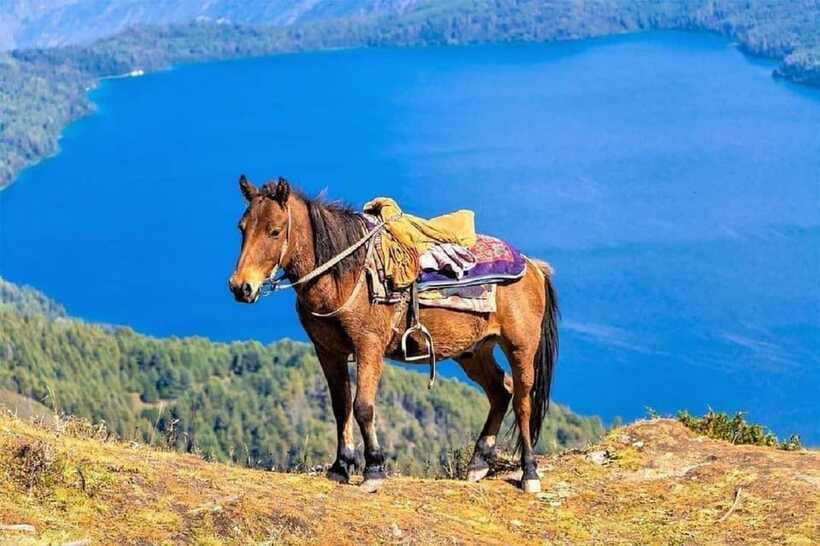
The higher route adds a strong visual payoff. From the hill, you might see the lake below and the mountain chain beyond it. Visibility depends heavily on weather, so do not book this solely for a guaranteed Himalayan panorama. In clear conditions, the view can be the best part of the outing. In haze or cloud, the forest ride may carry more of the experience.
The pace is better described as a guided countryside ride than a gallop. The promotional language suggests a rhythmic horseback adventure, but the actual conditions may call for walking, stopping, and careful downhill movement. That is normal on narrow or steep paths and may be safer for both you and the horse.
Heat, fitness, and what to wear
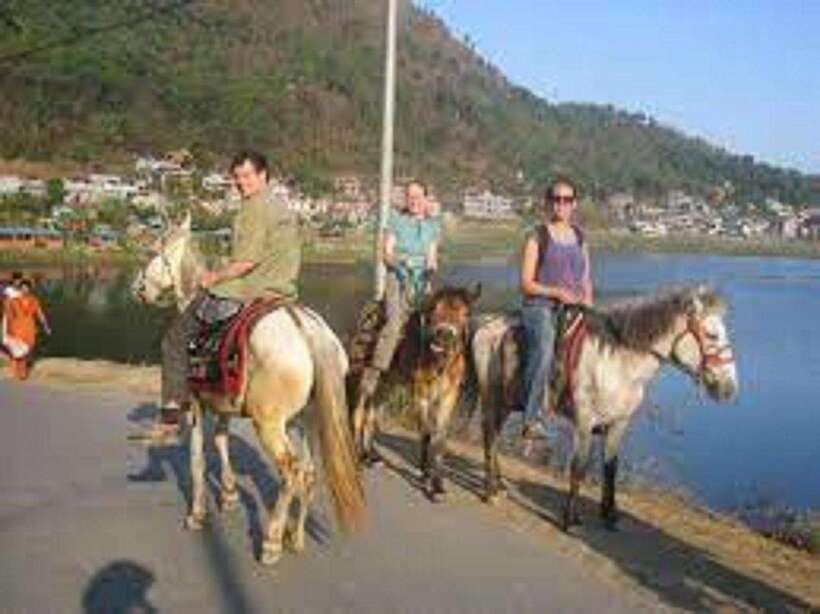
Pokhara can be hot enough to change the character of the ride. A temperature above 33 C made one hill route particularly difficult, with tired horses and frequent stops. If the forecast is hot, request the lake route or ask whether the outing should be moved to a cooler time.
You need enough fitness to sit securely in the saddle for 2.5 hours and to walk if the horse cannot safely continue on a steep section. People with a low level of fitness are advised not to book this activity. The same applies if you have a condition that makes balance or mounting difficult.
Wear comfortable clothes that allow your legs to move. Comfortable shoes are required, and a secure shoe is more useful than a loose sandal. Tie back long hair, bring sun protection, and carry water even though drinks are not included.
A camera is worth bringing, but keep it secure. The best photographs may come during a pause at a viewpoint rather than while moving through the forest. Carry a copy of your passport or identification card, as requested by the operator.
Alcohol and drugs are not allowed. Electric wheelchairs cannot be accommodated, and the activity is not designed for wheelchair users.
The guide and the private-group advantage
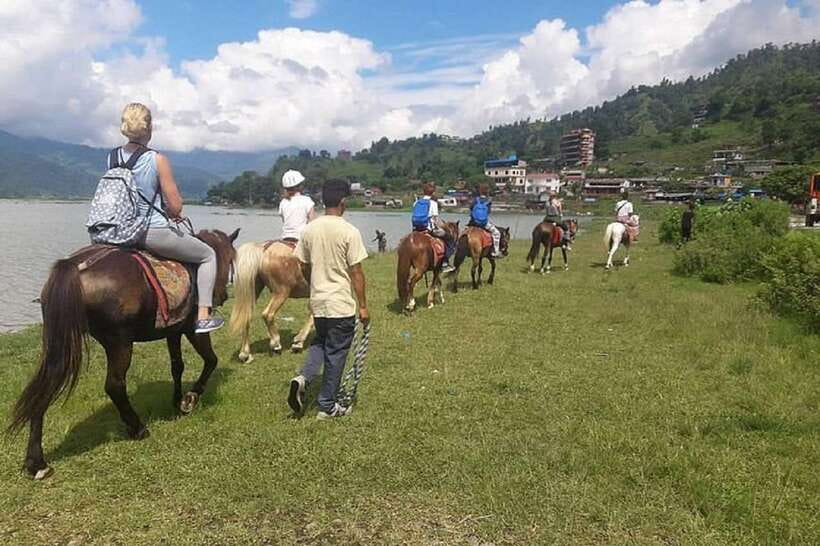
The guide is one of the strongest reasons to choose this activity. The local guide provides the safety briefing, helps you manage the horse, leads you through the trails, and can offer advice about the rest of your Pokhara stay. One rider appreciated being able to discuss and adjust sightseeing plans with the guide.
English and Hindi are available. That gives many riders a practical way to explain comfort levels, route preferences, and concerns about the horse. You should use that conversation before the ride, not after reaching a steep trail.
The private-group format also keeps the outing personal. You are not locked into the pace of a large group, and you can ask for a break or a slower section. The guide’s friendly manner and early arrival were both noted positively by riders who had smooth outings.
Do keep expectations realistic. A friendly guide cannot remove steep hills, intense heat, poor visibility, or the physical effort of riding. The guide can help you make a better choice, which is why route and weather questions matter so much.
Cancellation and booking flexibility
You can cancel up to 24 hours in advance for a full refund. The reserve-now-and-pay-later option lets you hold a place without paying immediately, useful when your Pokhara plans may change.
Starting times depend on availability. Since temperature affects the hill route, check the available time and ask which departure is likely to be most comfortable. The activity is private, so it is worth requesting a time that suits your group rather than treating the schedule as fixed.
Insurance is not included, and emergency rescue is excluded. That is standard information you should not skip, especially because the activity takes place on forest and hill trails rather than only on paved roads.
Who should book this Pokhara horseback ride?
I would recommend it to a reasonably fit rider who wants a short outing away from Pokhara’s streets and is happy with a calm, guided pace. It works well for someone who likes animals, forest paths, and viewpoints more than polished attractions.
It is also a good match for a rider who wants personal attention. The private group, local guide, pickup, and route flexibility can make the experience feel straightforward and relaxed.
I would be more cautious if you are booking mainly for a flat lakeside ride. Ask for that route specifically and confirm it before departure. I would also avoid the hill route in very hot weather, for heavier riders, or if you have little physical stamina.
This is not suitable for pregnant women, wheelchair users, or people with low fitness. It is also a poor choice if you dislike uneven ground, cannot tolerate heat, or expect to gallop for most of the 2.5 hours.
Should you book it?
Book this ride if you want a modestly priced, private way to see Pokhara’s forests and nearby hills, and if you are willing to confirm the route in advance. The best version of the experience combines a calm horse, a considerate guide, tolerable weather, and a clear mountain view.
My practical advice is to request the lake route if you want an easier ride, especially if you weigh more than 90 kilograms or the day is hot. Choose the hill route only if you are fit and mainly want the view from above.
At $32, the activity offers good value when the logistics run smoothly. Its real weakness is not the idea of horseback riding in Pokhara, but the gap between a gentle lakeside expectation and a demanding uphill reality. Ask the right questions before pickup, respect the horses’ limits, and this can be a memorable way to see the area at a slower, more natural pace.
FAQ
How long is the horseback riding activity?
The ride lasts 2.5 hours, including guided riding, sightseeing, safety information, scenic stops, and views along the route.
Where does hotel pickup take place?
Pickup is arranged in Pokhara’s Lakeside area. Lakeside Road 6 is listed as a pickup and drop-off location, with return to the Lakeside area.
Is the ride around the lake or through the hills?
The route can vary. Some outings go around the lake, while others climb into the hills and forest trails. Ask the operator to confirm the route before departure.
What languages does the guide speak?
The live guide is available in English and Hindi.
What is included in the price?
The $32 price includes hotel pickup by horse as stated in the activity details, a professional local guide, a trained horse, safety equipment, guided riding through forests and trails, and scenic views around Pokhara.
What should I bring, and who should not book?
Bring comfortable shoes, comfortable clothes, a camera, travel insurance, a hair tie, and a passport or identification copy. The activity is not suitable for pregnant women, wheelchair users, or people with a low level of fitness.
Just added around the world
- Zanzibar: Swimming With Horse and Clear Kayaking Tour★ 3.9 · 5 reviews
- Zanzibar: Horseback Riding and Turtle Swimming Tour★ 3.3 · 4 reviews
- Zanzibar: Horseback Riding and Turtle Aquarium Visit★ 4.3 · 4 reviews
- Zakynthos: Yotomu Horse Riding and Swimming Experience★ 4.7 · 80 reviews
- Zanzibar: Horse Riding and Kayaking with Video and Photos★ 4.9 · 10 reviews
- Westport: Beach and Countryside Guided Horse Ride★ 4.8 · 6 reviews
- Xi’an: Half-Day Terracotta Warriors & Horses Museum Tour★ 4.4 · 7 reviews
- Waco: Horseback Riding Tour with Cowboy Guide★ 5.0 · 32 reviews
Horseback Riding Tours, compared.
Punta Cana Zipline Adventure with Buggies and Horseback Riding
Read our review →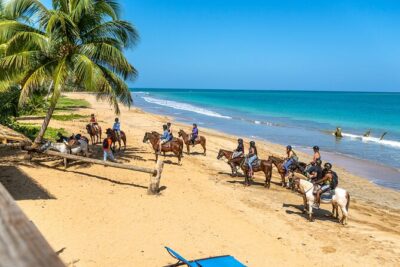
Luquillo Beach Horse Ride from Carabalí Rainforest Adventure Park
Read our review →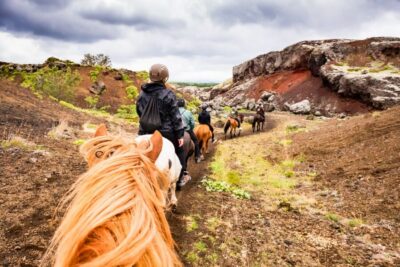
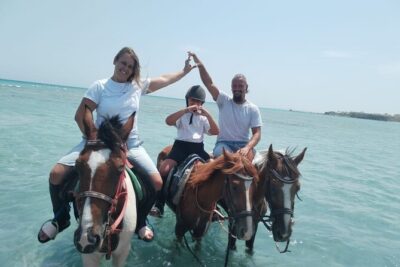
Red Sea & Desert Horse Riding Tour with Swimming
Read our review →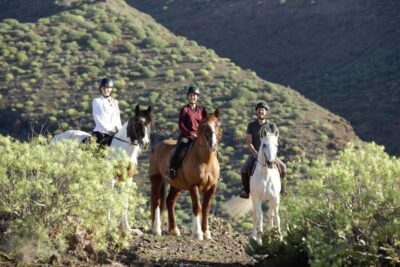
El Salobre: Horse Riding Adventure with Transfer Options
Read our review →
Half-Day Thoroughbred Horse Farm Tour in Kentucky
Read our review →