
Review · LUXOR
Luxor: Farm Tour 30 Hectares(Breakfast With Arabian Horses)
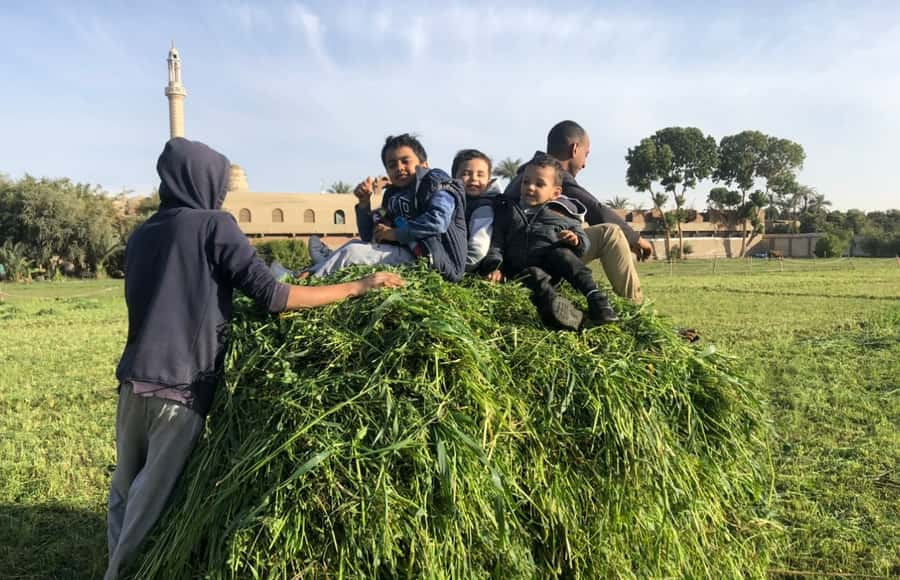
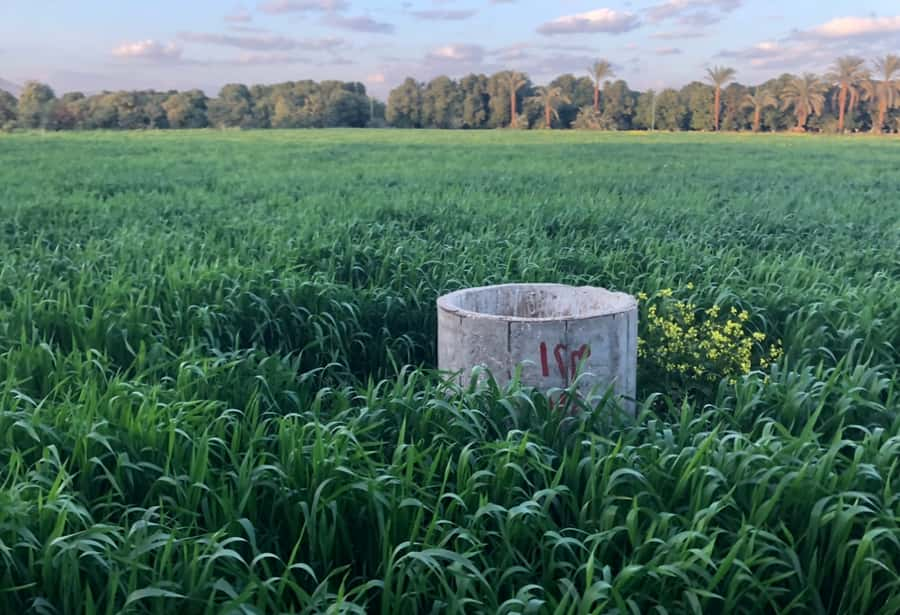
The most memorable part of this outing is the chance to sit beneath a shaded kiosk, eat a warm Egyptian breakfast, and look across mango trees and alfalfa fields before meeting pure-bred Arabian horses at close range. This is a working family or cooperative farm, not a polished animal park, and that makes the visit feel personal.
I like the fresh food, especially the farm honey, homegrown fruit, mint tea, and warm flatbread. I also like the easy pace: you get time to wander among horses, cows, sheep, goats, chickens, ducks, bees, and a camel instead of being hurried from one display to the next.
The main consideration is the short two-hour schedule. You get a pleasant taste of rural life, but not a long farm stay. Summer heat can also be strong, although the mango canopy and covered seating offer welcome shade.
Key points to know before you book
- Warm flatbread and farm honey: Breakfast can include fresh bread, goat cheese cream, fig jam, sugarcane molasses, homemade honey, fruit, and mint tea.
- Arabian horses at close range: The farm keeps horses from young foals to adult stallions, and horseback riding may be offered during the visit.
- A large mango plantation: The farm description refers to 30 hectares of mango trees within a property of more than 50 hectares, with many varieties grown.
- A real working farm: You may see cows, sheep, goats, chickens, ducks, bees, and one camel alongside the horses.
- Simple transport from Luxor: Pickup and return are included, with about 20 minutes of van travel each way.
- A personal guided visit: Arabic and English are available, and Abdo and Rajiv are named as guides connected with the experience.
A farm morning beyond Luxor’s monuments
Luxor is rightly famous for temples, tombs, and royal burial sites. Yet the West Bank is also home to ordinary farmland, Nile irrigation, fruit trees, and family-run agricultural businesses. This visit gives you a look at that quieter side of the area.
The farm is called Al-Habib Farm. It covers more than 50 hectares according to the description, with about 30 hectares planted with mango trees. The details about the number of mango varieties vary: one description lists 25 types, while a guest counted 62 types. The safe takeaway is that this is a serious mango-growing operation, not a small garden with a few fruit trees.
You begin with pickup in Luxor. The drive takes about 20 minutes by van. The route includes crossing from the city toward the West Bank, described as taking either the bridge or a boat, while the detailed schedule refers to the bridge. If the river crossing matters to you, ask for the exact arrangement when confirming your start time.
The transfer is useful because it removes the need to arrange a taxi to a rural property. It also keeps the visit compact. You spend roughly 40 minutes in transport and two hours at the farm, making this easy to fit around a morning temple visit or a later sightseeing plan.
More Ranch and Farm Horse Rides in Egypt:
- Traditional Egyptian Breakfast at the AlHabib Arabian Horse Farm
★ 5.0 · 24 reviews - Half-Day Thoroughbred Horse Farm Tour in Kentucky
★ 5.0 · 1,924 reviews - 5 tours in 1 (Eco Farm/Horseback/City Tour/Buggy/Zipline)
★ 4.5 · 1,443 reviews
Breakfast under the mango trees
The food is not an extra decoration added to an animal visit. It is one of the main reasons to choose this experience. You sit under a kiosk or tree canopy with views toward the mango orchard and alfalfa fields.
The breakfast is based on traditional Egyptian dishes. Details can vary with the day, but the meal may include warm flatbread, fresh goat cheese cream, fig jam, sugarcane molasses known as black honey, and honey from the farm’s own beehives. Tea made with homegrown mint is also part of the experience.
Fresh fruit may include mangoes, oranges, or lemons, depending on the season. That seasonal point matters. You should not expect every fruit mentioned to appear at every visit, but the farm setting makes the meal feel more connected to the land than a standard hotel breakfast.
One particularly useful detail is the bread. It has been described as fresh and warm, with a lighter, layered texture rather than the dark, coarse bread sometimes served elsewhere. If you enjoy simple food with a clear sense of place, this breakfast should be a highlight.
I would give yourself time to eat slowly. The shaded seating area is where you first get a feel for the farm. You can look over the orchard, watch the fields, sample honey and fruit, and settle into the slower rhythm before walking around.
Meeting the Arabian horses
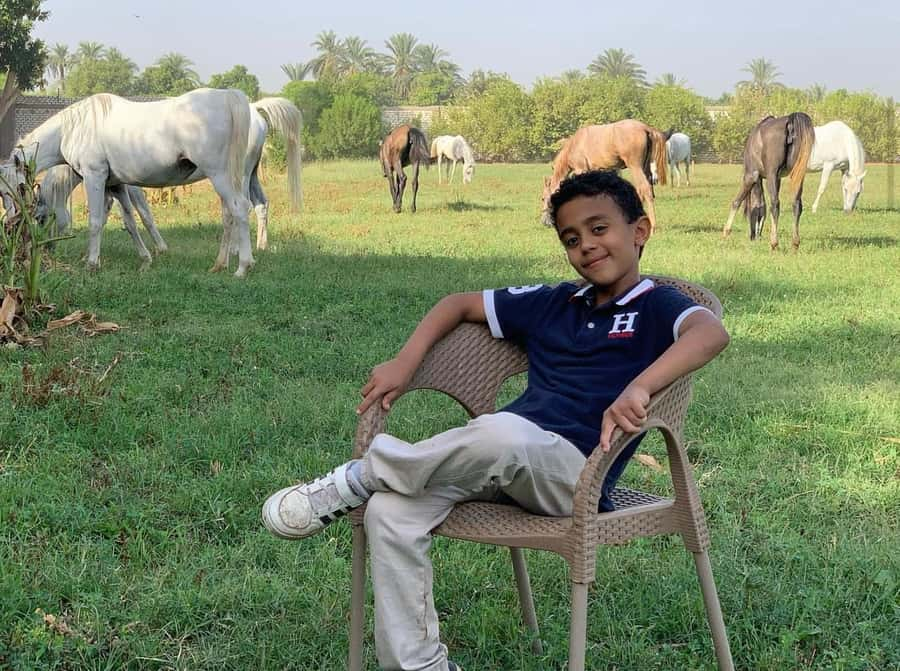
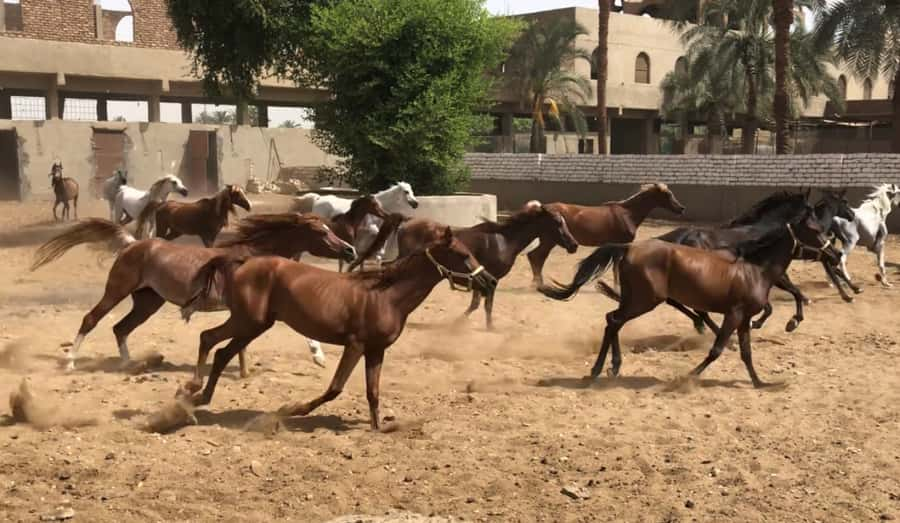
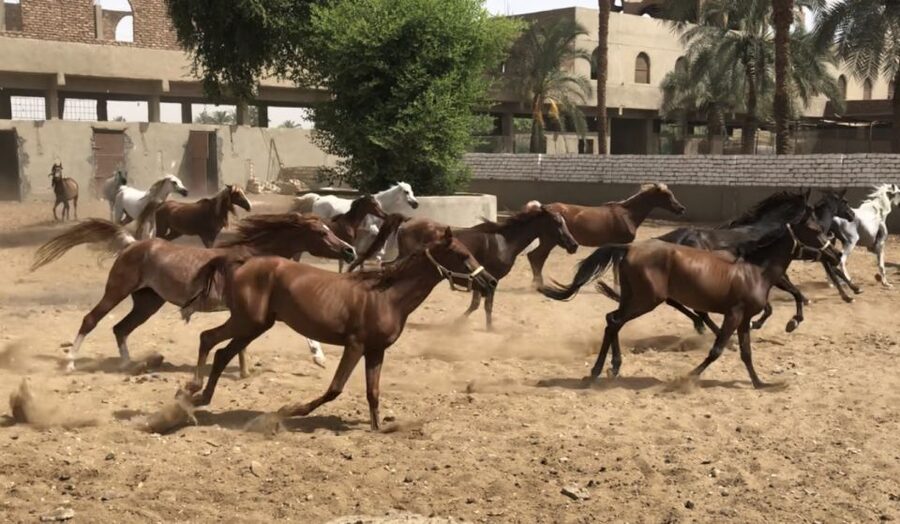
The horses are the star attraction. Al-Habib Farm keeps dozens of pure-bred Arabian horses, ranging from babies to stallions. That age range gives the visit more variety than a short photo stop with one or two riding animals.
You get close to the horses as part of the farm walk. The exact amount of touching or handling depends on the guide and the animals, so you should follow instructions rather than assume every horse is available for petting. Stallions in particular deserve sensible distance and calm behavior.
A notable detail from the experience is that visitors may be allowed a few rounds of horseback riding. This is not presented as a long riding lesson or a full trail ride. Think of it as a brief chance to sit on a horse and ride within the farm area.
If you have never ridden before, tell the guide. If you already ride, keep your expectations measured. The principal attraction is seeing the horses and learning about the farm, not a technical equestrian session.
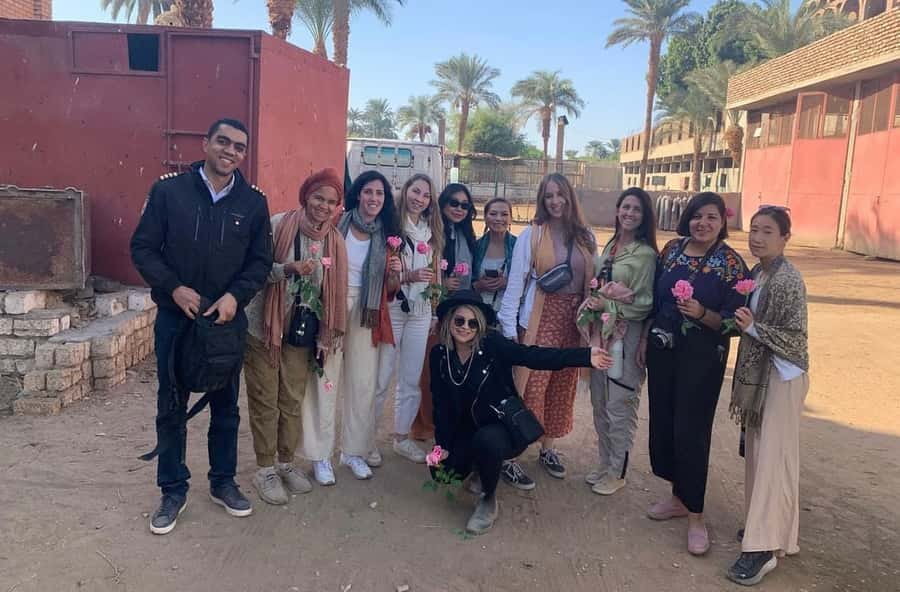
Abdo and Rajiv are named as guides for the visit. They are also experienced hot-air-balloon pilots, which adds an interesting connection to Luxor’s West Bank tourism. Their role here is to show you the property and explain what you are seeing. Arabic and English are available.
Beyond horses: bees, goats, birds, and a camel
The farm walk is broader than a horse visit. You may see cows, sheep, goats, chickens, ducks, bees, and a camel. This mix helps you understand the farm as a working agricultural place rather than an attraction built around one animal.
The smaller animals are useful for families and for anyone who wants a gentle introduction to rural Egyptian life. Children may find the goats, poultry, and young animals especially engaging, although the data does not specify a children’s program or supervised feeding. Do not assume that feeding is allowed.
The beehives have a direct link to the breakfast table. You may taste honey produced on the farm, then see where it comes from during the walk. That small connection between food production and the meal gives the visit more meaning.
The camel is another memorable sight, but the information does not promise a camel ride. You should book this for the farm visit and horse encounter, not for camel trekking.
More Horseback Riding Tours in Egypt:
- Hurghada: Red Sea & Desert Horse Riding Tour with Swimming
★ 4.8 · 2,198 reviews - Hurghada: Sea & Desert Horse Tour, Stargazing, Dinner & Show
★ 4.5 · 1,592 reviews - Hurghada: Arabian Desert and Sea Horseback Adventure
★ 4.5 · 778 reviews - Hurghada: Sea & Desert Horse Riding tour/w Swimming&Transfer
★ 4.8 · 649 reviews
Cooling off beneath 30 hectares of mango trees
Luxor can be intensely sunny, so the orchard is practical as well as attractive. The branches provide shade during the walk and offer a place to pause after breakfast.
Mango trees cover roughly 30 hectares of the farm, with many types planted across the property. You may also see Meyer lemons, figs, olives, and dates. The crops depend on the season, so the orchard will not look or produce the same way all year.
The farm’s size changes the feel of the visit. You are not simply looking at a decorative courtyard. There is room to walk, see planted fields, and understand how fruit growing fits into the local economy. At the same time, two hours is not enough to cover a property of this scale in detail.
Wear shoes suitable for an outdoor walk. The supplied information does not specify the condition of every path, so practical footwear is wiser than sandals with little support. Bring sun protection, and use the shaded areas when available.
What the 2-hour schedule really gives you
The published timing is simple:
- About 20 minutes by van from Luxor
- Two hours at the farm for breakfast, a guided walk, sightseeing, and animal viewing
- About 20 minutes back to Luxor
The two-hour farm visit needs to cover several elements: breakfast, the orchard, the animal area, the horses, and the return to the vehicle. You can enjoy all of them, but this is an introduction rather than a full agricultural tour.
The experience works best if you want a relaxed break from temples and museums. It is less suitable if you want detailed botany, a long riding session, or a full day spent working with animals.
Pickup and drop-off are included, which makes the timing easier to manage. You do not need to negotiate a separate ride back from a rural location. The activity also offers free cancellation up to 24 hours before the visit and a reserve-now, pay-later option, useful if your Luxor plans may change.
Price and practical value at $30
At $30 per person, the value rests on the combination of services rather than any single feature. You receive transport, breakfast, drinks, a guide, access to a large farm, and close contact with a wide range of animals.
A simple farm walk on its own might cost less, but arranging transport to the West Bank and finding a comparable local breakfast would take effort. The included return ride is especially useful for independent visitors who do not want to spend part of the morning bargaining for taxis.
The price also makes more sense if you care about direct contact with local food production. You are eating honey, fruit, bread, cheese, and tea in the same agricultural setting where some of those products are grown or made. That is a more grounded experience than another meal in a hotel dining room.
Still, you should not book it expecting a luxury excursion. The setting is described as a typical organic Egyptian farm, with a kiosk and tree canopy rather than a formal restaurant. That simplicity is part of the appeal, but it also means the experience may feel informal.
Who will enjoy this visit most
I would recommend the farm to several types of visitors:
- You want a break from Luxor’s ancient sites and a look at present-day rural life.
- You enjoy animals, especially horses, but do not need a long riding program.
- You care about local food and prefer breakfast served close to its source.
- You are traveling with children who need a change from monuments.
- You want a short West Bank activity with transportation included.
- You like small-scale cultural experiences with time for conversation.
It may not suit you if you want a tightly scripted sightseeing tour, a long horse ride, or guaranteed access to every animal. The descriptions promise close contact with the farm animals, but they do not specify a fixed riding duration, a set menu, or a particular group size.
The farm is listed as wheelchair accessible, which is useful information for planning. Because the visit includes outdoor walking among fields and animals, you should still confirm the exact route and surfaces if you have specific mobility needs.
Tips for making the most of the morning
Ask about the pickup time and river crossing before the day begins. The information refers to both boat and bridge crossings, while the detailed schedule uses the bridge, so confirming this removes uncertainty.
Eat breakfast under the canopy before walking far into the property. The shaded seating area is one of the most pleasant parts of the visit, and the meal may include seasonal fruit and fresh products that are best enjoyed without rushing.
Ask the guide to explain the mango trees, bees, and horses. The farm has enough variety that a few questions can turn a simple walk into a clearer picture of how the property works.
If you want to ride, mention it early. A few rounds may be possible, but the visit is not sold as a dedicated riding lesson. Early notice gives the guide a better chance to include it in the schedule.
Bring water, even though water and drinks are included. Cover your shoulders and head from the sun, and choose comfortable footwear. The orchard offers shade, but Luxor’s heat can still make an outdoor walk tiring.
Should you book Al-Habib Farm?
Book it if you want a short, friendly look at Egyptian farm life, with a good breakfast and horses at the center. The strongest features are the warm flatbread, farm honey, fresh produce, shaded mango orchard, and the range of animals you can see in one visit.
I would especially choose it after several days of temples and tombs. It gives you a useful change of pace and a closer look at how people live and grow food around Luxor today.
Skip it if your priority is a long horseback ride, an advanced horse experience, or a detailed agricultural course. For everyone else, $30 is a reasonable price for transport, food, guiding, and a relaxed two-hour visit to a large West Bank farm.
FAQ
Where is the farm located?
Al-Habib Farm is on Luxor’s West Bank in Luxor Governorate, Egypt.
How long does the experience last?
The farm visit lasts two hours. The listed transport time is about 20 minutes each way from Luxor.
Is transportation included?
Yes. Pickup and drop-off from Luxor are included.
How do you cross to the West Bank?
The information describes crossing by boat or bridge, while the detailed schedule refers to the bridge. Confirm the exact crossing arrangement when booking.
What food is served?
The experience includes a traditional Egyptian breakfast. It may include warm flatbread, honey, goat cheese cream, fig jam, sugarcane molasses, fresh fruit, and mint tea.
Are drinks included?
Yes. Water and drinks are included.
What animals can you see?
The farm has pure-bred Arabian horses, cows, sheep, goats, chickens, ducks, bees, and a camel.
Can you ride a horse?
A few rounds of horseback riding may be included during the visit. The experience is not described as a long riding lesson or trail ride.
What languages are available?
The live tour guide service is available in Arabic and English.
Is the activity wheelchair accessible?
Yes, the activity is listed as wheelchair accessible. You should still confirm the outdoor route if you need specific access arrangements.
Can you cancel for a refund?
You can cancel up to 24 hours in advance for a full refund. A reserve-now, pay-later option is also available.
Just added around Egypt
- 1 Hour Turkish Bath & 1 Hour Horseback Riding – Sharm El Sheikh★ 4.5 · 3 reviews
- Sharm El-Sheikh: 2-Hour Horse Ride Along Beach & Desert Trails★ 5.0 · 3 reviews
- One Hour Horse or Camel Riding with Transfer- Sharm El-Sheikh★ 4.5 · 20 reviews
- Horse Riding One Hour at Desert With Transfer – Sharm El Sheikh★ 4.5 · 15 reviews
- ATV horse stargazing★ 5.0 · 26 reviews
- One Hour Horseback Riding Trip with Transfer – Sharm El Sheikh★ 4.0 · 4 reviews
- 1 Hour Guided Horse Riding Activity in Sharm El Sheikh★ 5.0 · 4 reviews
- Horse Ride Trip , Bedouin Dinner And Show – Sharm El Sheikh★ 4.5 · 7 reviews
Ranch and Farm Horse Rides, compared.
Half-Day Thoroughbred Horse Farm Tour in Kentucky
Read our review →
Unique Horse Farm Tours with Insider Access to Private Farms
Read our review →
Maui Horseback Adventure at Circle M Ranch With Real Cowboys
Read our review →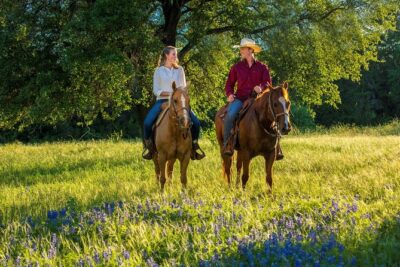
Horseback Riding on Scenic Texas Ranch near Waco
Read our review →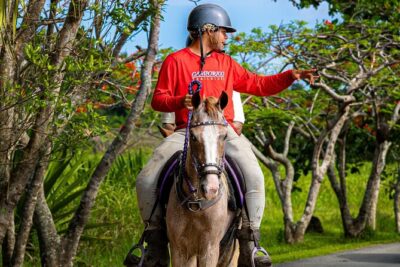
Lexington: Thoroughbred Horse Farm Tour and Scenic Bluegrass
Read our review →
Golden Circle, Fridheimar Farm & Horses Small Group Tour from Reykjavik
Read our review →Browse the lists this tour appears in