
Review · MOROCCO
Desert Trail in Morocco on Horseback
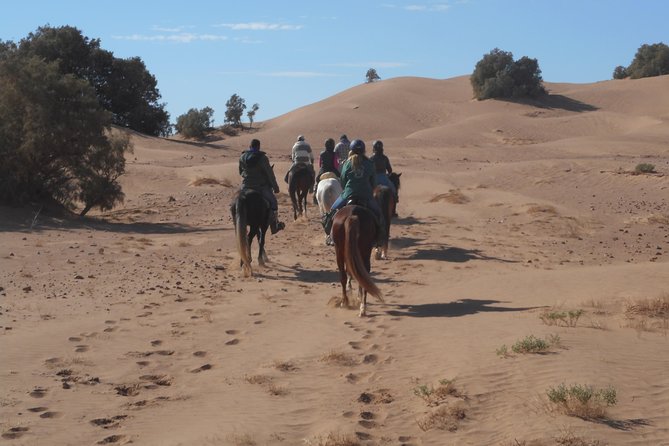
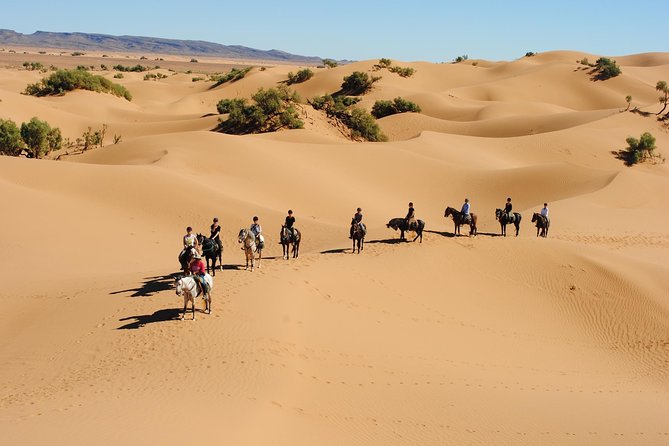
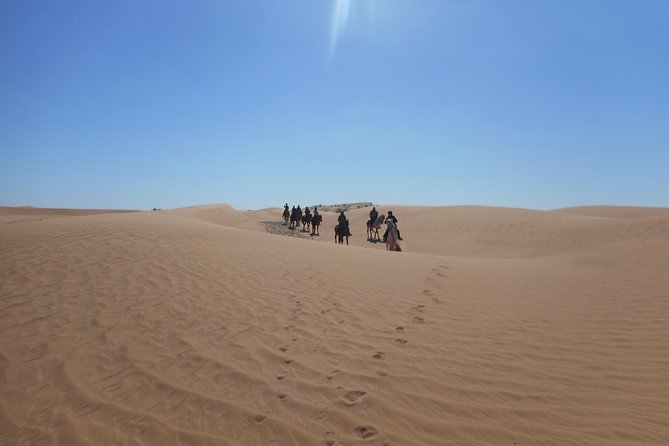
Morocco’s Sahara is best understood at a horse’s pace. This six-day ride carries you from Zagora through Tuareg villages, the Draa palm grove, open desert, dunes, rocky plains, and the Jebel Bani range. You are not simply looking at the desert from a vehicle. You cross it day after day, with Arab-Berber horses and overnight camps along the route.
I like the small group limit of 10, which should make the riding more personal and easier to manage. I also like the useful all-in package: airport pickup, private transport, a guide, five nights of accommodation, meals, and the horses are covered. The main caution is the pace: most days run about eight hours on horseback, so this is a serious riding holiday, not a gentle sightseeing outing.
Key points before you book
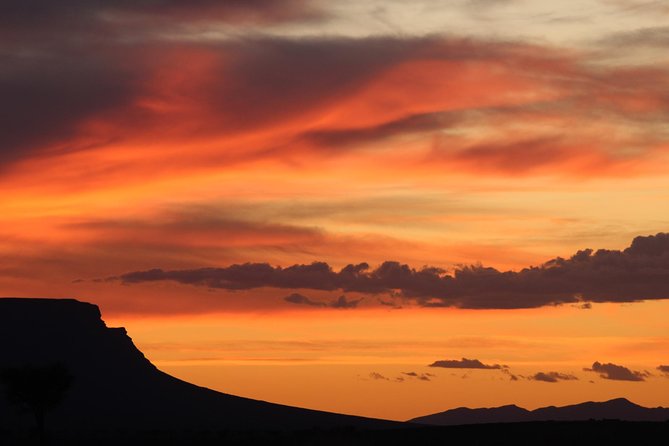
- Six days in the Sahara: Ride from Zagora through Tagounite, M’Hamid, and Jebel Bani before returning to Zagora.
- Long daily hours: Expect roughly eight hours in the saddle on Days 1 through 5, then six hours on the final day.
- Two sides of the desert: The route includes the gardens and old castles of the Draa palm grove, plus dunes and hard, rocky desert.
- Arab-Berber horses: The tour uses Arab-Berber horses, described as gentle in the supplied information.
- Meals and transport included: Breakfast, lunch, dinner, afternoon tea, airport transfers, and private vehicle transport are part of the package.
- Strict cancellation terms: The $234.91 price is non-refundable and cannot be changed after booking.
Riding from Zagora into the Draa palm grove
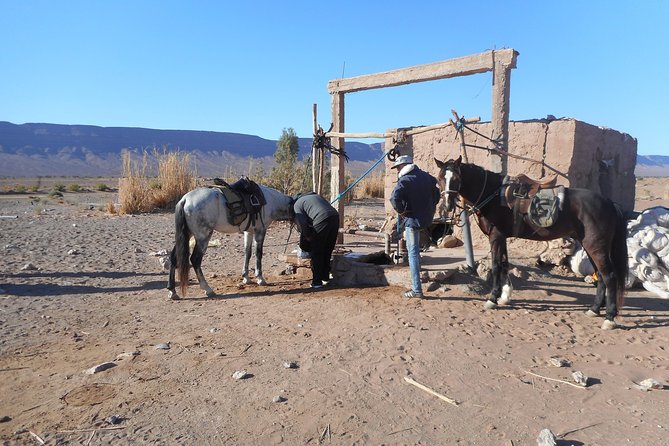
Your meeting point is Zagora Airport at 10:00 a.m. A taxi takes the group from the airport to the horses, where you prepare for the first day in the saddle. The ride then crosses a Tuareg village before reaching the day’s lunch stop.
The early scenery gives you more than sand. The Draa area is known here for its large palm grove, small gardens, and old Moroccan castles. This is an important part of the route because it shows how people live beside the desert, rather than treating the Sahara as an empty backdrop.
The afternoon continues across varied ground and includes a river crossing before you reach camp. The first day is listed at eight hours, so allow time for your body to adjust. Even if you ride often, eight hours outdoors can feel long. If you are new to riding, ask for clear instructions about pace, mounting, and breaks before leaving Zagora.
The package includes lunch, dinner, breakfast, afternoon tea, accommodation, and a guide. It does not specify the exact style of accommodation at each stop, so you should ask the operator what the five nights involve before paying. The word camp is used for some nights, but the supplied details do not state whether every night is in a tent or another type of lodging.
More Desert Horse Riding in Morocco
- Agadir: Forest and Sand Dunes Guided Horse Riding
★ 4.4 · 278 reviews - Marrakech: Desert and Palmeraie Horse Riding Tour & Transfer
★ 4.8 · 221 reviews - 2 hours horse ride beach and dunes in Essaouira Morocco
★ 4.5 · 38 reviews
Tagounite and a full day in open desert
Day 2 takes you toward Tagounite through desert scenery. The description is brief, but that is part of the point: this is a day for the rhythm of the ride rather than a list of monuments. You spend most of the day moving across open country, with the horse, the guide, and the changing ground providing the focus.
Eight hours is again the planned duration. That makes saddle comfort a practical concern. Wear clothing suitable for riding and sun exposure, and ask the operator what equipment is supplied. The stated dress code is smart casual, but that label is less useful than practical riding clothes for a long day outdoors.
The tour accepts most people and says it suits all ages and skill levels. I would read that carefully. It means the operator presents the ride as broadly accessible, but it does not remove the physical demands of long hours on horseback. If you have limited riding experience, a back problem, or concerns about endurance, contact the provider before booking.
The group maximum is 10 people. That is a good size for a route where the guide must keep riders and horses together. It also limits the chance of a large, slow procession, though the actual pace will depend on the group’s riding ability.
Jebel Bani, where the Sahara meets the mountains
On Day 3, the route approaches the lower part of Jebel Bani. The description compares the mountain setting to a canyon in the Sahara, which gives you a useful idea of the change in scenery. The ride is not only a flat crossing of sand. You also see rocky country and mountain forms.
This section should appeal to riders who want variety. Desert travel can become visually repetitive, especially from a vehicle. On horseback, the gradual change from palms to open desert, rock, and mountain terrain gives the journey a stronger sense of place.
The day still runs about eight hours. Jebel Bani also makes it worth asking about the horse’s pace and the route’s riding conditions. The details confirm that you ride toward and later across the mountain, but they do not provide elevation figures or trail grades. You should not assume the route is flat or effortless.
Meals remain included. Breakfast, lunch, and dinner are listed for the trip, along with five nights of accommodation. Six lunches and six breakfasts are included in the package details, while five dinners are listed, which fits a six-day trip ending with a flight or departure on the final day.
Entering M’Hamid on horseback
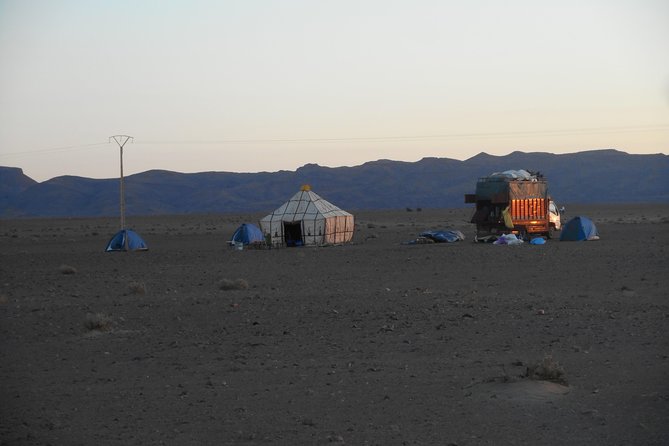
Day 4 brings you into M’Hamid, described as an old Sahara city with the feel of a Western film. It is one of the route’s most characterful moments because you enter the town on horseback rather than arriving in a transfer vehicle.
M’Hamid matters as a transition point. It connects settled desert communities with the more open Sahara beyond. The ride gives you a chance to see the town as part of the route, not just as a place to sleep or refuel.
Again, plan for eight hours. The itinerary gives each day a single main stop, so the journey is about covering ground. It does not promise a formal town tour, museum visit, or scheduled sightseeing program in M’Hamid. If you want time to explore on foot, ask how much free time is available.
The supplied feedback praises the hosting team’s care, kindness, and humor. It also refers to Ranch de Diabat as a long-term family connection for one rider, with repeated horse treks since 2018. Those comments point to a warm riding culture around the provider, though they concern the company’s wider horse trekking work and do not identify individual guides for this Sahara route. No guide names are provided, and the guide may be multilingual.
Same saddle, a different kind of ground:
- Marrakech: Private Horseback Tour in the Palm Grove with Tea
★ 4.8 · 1,092 reviews - Agadir and Taghazout: 2-Hour Horseback Ride on the Beach
★ 4.6 · 888 reviews - From Marrakech: Atlas Mountains 45-Minute Horseback Ride
★ 4.6 · 327 reviews - From Essaouira: 1-Hour Horse Ride
★ 4.9 · 243 reviews
Crossing the biggest part of Jebel Bani
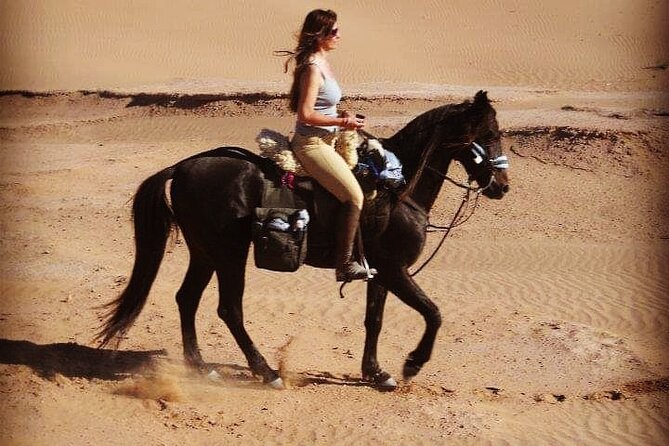
Day 5 is the route’s most demanding-looking section. You cross the largest part of Jebel Bani, climb with the horses, pause for a broad view, and then descend toward camp.
The high point is clearly the scenery. A mountain view after several days in the desert can feel like a real reward, and the ride gives you time to see the change slowly. You are not being driven up for a quick photo stop. You make the approach on horseback and then continue down to camp.
This is also the day when riding ability matters most. The information says you go up and then down, but it does not give technical details about the trail. Stay close to the guide, follow instructions, and do not treat a confident horse as a substitute for careful riding.
If the tour really welcomes every skill level, the guide should match the pace to the least experienced rider. That is one reason the 10-person maximum matters. Still, I would ask directly about the amount of walking, the steepness, and the expected riding pace before booking if you are unsure.
The final ride back toward Zagora
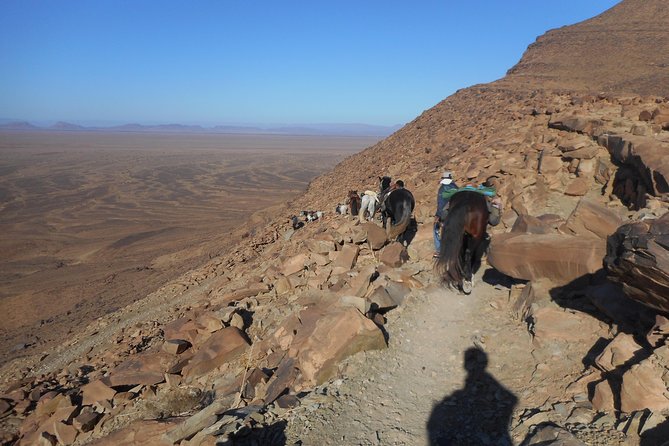
Day 6 is shorter, at about six hours. You spend a last day on horseback, with final gallops on the Arab-Berber horses, then say goodbye and return for your flight.
The wording suggests that faster riding may be available, but do not assume you will gallop for long stretches. Your actual pace depends on the guide, the terrain, the horses, and the ability of the group. Ask about this before booking if fast riding is a major reason for choosing the trip.
The end point is back at the meeting point, and the package includes Zagora Airport pickup and drop-off. The timing deserves attention. The activity starts at 10:00 a.m., but the provided details do not state the exact return time or flight schedule. Confirm that your onward flight leaves late enough for the final ride, transfer, and any airport procedures.
What the $234.91 price really covers
At $234.91 per person, the listed price is unusually low for six days of organized riding with accommodation, meals, horses, a guide, private vehicle transport, and airport transfers. The value looks strong on paper because the major daily costs are bundled together.
You are paying for much more than a few hours in the saddle. The package includes five nights, six breakfasts, six lunches, five dinners, afternoon tea, and transport from Zagora Airport. It also removes the need to arrange a horse, driver, desert transfer, and meals separately.
There are limits to that value. The price does not include tips, and the stated recommendation is a tip worth 10 percent of the entire travel package. That would add about $23.49 to the listed price, bringing the practical total to roughly $258.40 per person before any other personal spending.
The accommodation is not described in enough detail to judge its comfort. You should ask about room arrangements, bathrooms, bedding, and camp facilities. The low price may be excellent value for a simple, active trip, but it may not suit you if you expect polished hotel rooms or a luxury desert camp.
Food, clothing, and group practicalities
Breakfast, lunch, and dinner are included for most or all of the trip, and afternoon tea is also listed. Vegetarian food is available if requested in advance. You should provide all dietary requirements when booking, rather than waiting until arrival.
The official dress code is smart casual, but riding clothes are the sensible choice. You need clothing that works in the saddle, protection from sun and dust, and footwear suitable for riding. The provided information does not state whether helmets, riding boots, or other equipment are supplied, so confirm what you must bring.
A passport name, number, expiry date, and country are required for every participant at booking. Confirmation is sent within 48 hours, subject to availability. The tour operates with a maximum of 10 people, and a multilingual guide may lead the group.
Most people can participate, and the tour is presented as suitable for all ages and skill levels. I would still treat this as an active trip because five days involve roughly eight hours of riding. The lack of a stated riding minimum means you should describe your experience honestly when booking.
Who should book this Sahara horse trek
I would choose this trip if you want a sustained horse journey rather than a short desert photo stop. It suits riders who enjoy simple accommodation, long days outside, changing scenery, and the social rhythm of a small group.
It also suits someone who wants to connect the desert with living communities. The Tuareg village, Draa gardens, old castles, M’Hamid, and the mountain route provide more context than a trip spent only among dunes.
I would hesitate if you want a relaxed holiday, dislike long hours in the saddle, or need firm details about accommodation before booking. The non-refundable policy is especially important. Since the entire payment is lost if you cancel or request a change, do not book until your health, dates, passport details, dietary needs, and flight plans are settled.
Should you book it?
Book this horse trek if the main draw is the journey itself: six days with Arab-Berber horses through palms, villages, dunes, rock, and Jebel Bani. The price offers strong value, and the small group, included meals, transfers, and local guide make the logistics easier.
Before you pay, confirm the accommodation, riding equipment, daily pace, mountain trail conditions, and final airport timing. If you are comfortable with long riding days and basic desert travel, this can be a memorable way to see Morocco. If you want luxury or an easy introduction to the Sahara, choose a shorter ride instead.
FAQ
Where does the horse trek begin?
The tour begins at Zagora Airport in Morocco. A taxi takes the group from the airport to the horses.
What time does the tour start?
The stated start time is 10:00 a.m.
Where does the tour finish?
The activity ends back at the meeting point in Zagora.
How long does the experience last?
The tour lasts approximately six days.
How many hours do you ride each day?
Days 1 through 5 are listed at about eight hours each. Day 6 is listed at about six hours.
Which places are included in the route?
The route includes Zagora, Tagounite, Jebel Bani, and M’Hamid. It also passes through a Tuareg village, the Draa palm grove, a river area, desert terrain, and mountain sections.
Are meals included?
Yes. Breakfast and lunch are listed for six days, dinner is listed for five days, and afternoon tea is included.
Is airport transport included?
Yes. Zagora Airport pickup and drop-off are included, along with transport by private vehicle.
Is vegetarian food available?
Yes. A vegetarian option is available, but you must request it when booking. You should also provide other dietary requirements in advance.
Can the booking be cancelled or changed?
No. The experience is non-refundable and cannot be changed for any reason. A tip of 10 percent of the full travel package is also stated as not included in the price.
More Guided Horseback Trail Rides in Morocco
- Los Angeles: Mulholland Trail Horseback Riding Tour
★ 4.7 · 615 reviews - Horse Sanctuary & Trail Ride in Ostia Antica
★ 4.5 · 276 reviews - Cardrona High Country Pub Trail Horse Trek (Intermediate level+)
★ 5.0 · 269 reviews - Los Angeles: 2-Hour Hollywood Trail Horseback Riding Tour
★ 4.7 · 256 reviews
Just added around Morocco
- 1 Hour Horse Riding Adventure in Ait Ben Haddou★ 5.0 · 2 reviews
- 3-hour Horseback Ride Mountain and Beach Morocco★ 5.0 · 22 reviews
- Marrakech Horse Riding★ 4.0 · 8 reviews
- Palmeraie Grove Horse Ride 2 Hour Trip with Transfer – Marrakesh★ 5.0 · 4 reviews
- Horse Riding one hour Palmeraie Grove & Transfer – Marrakesh★ 4.5 · 3 reviews
- Horse back riding near Agafay desert and 2 Atlas Mountain valleys discovery★ 5.0 · 2 reviews
- Marrakech Day Trip to Essaouira – Horseback, Camel Ride, ATV on the Beach★ 4.0 · 4 reviews
- Private horseback ride in the Palmeraie of Marrakech★ 5.0 · 73 reviews
Desert Horse Riding, compared.
Red Sea & Desert Horse Riding Tour with Swimming
Read our review →
Sea & Desert Horse Tour, Stargazing, Dinner & Show
Read our review →
Cabo Desert Off-Road & Beach Horseback Combo and Tequila Tasting
Read our review →
Sea & Desert Horse Riding tour/w Swimming&Transfer
Read our review →
Almeria: Horse Riding Tour Through the Tabernas Desert
Read our review →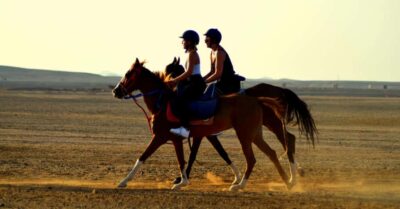
Browse the lists this tour appears in