
Review · ARUBA
Aruba North Coastline: Small-Group Horseback Riding Tour
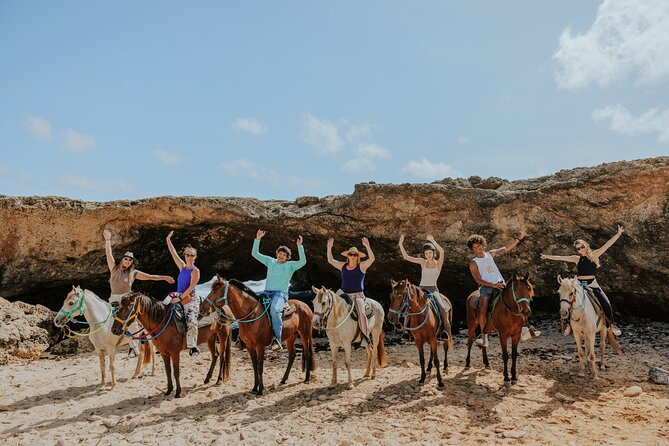
Aruba’s north coast is at its best away from the resort strip, where a horse carries you past cactus, rough stone, open sea, and the old Bushiribana gold mill. This is not just a slow loop around a corral. The route reaches places buses cannot, with time for beach photos and, on suitable stretches, a faster ride across the sand.
I like the small group of no more than 10, and I like the careful start, with riding instruction required before anyone mounts. Calm horses and attentive guides make this a good choice for first-time riders, while experienced riders still get some freedom to guide their horses. The main consideration is that much of the ride may be single file and at a walking pace, especially across the rocky cactus country.
Key points to know before you book
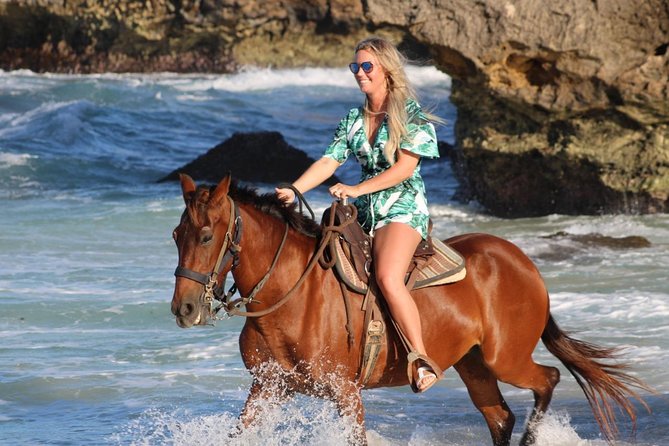
- The ride begins near Matividiri, right by Aruba’s northern coast, so ocean views start soon after leaving the ranch.
- Bushiribana Gold Mill Ruins add a useful piece of Aruba’s mining past to what could otherwise be a simple trail ride.
- Wariruri Bay is the scenic payoff, with white sand, beach riding, dunes, and the small natural bridge.
- The group is capped at 10 riders, giving guides room to help beginners and manage the horses.
- Riding instruction starts at 3:30 pm, even though the scheduled ride begins at 4 pm.
- The stated rider limit is 220 pounds, and long pants, firm shoes, and advance pickup arrangements matter.
A north coast ride far from Aruba’s beach resorts
Most of Aruba’s famous beach time happens on the calm western shore. This excursion takes you in the opposite direction, toward the island’s rougher northern edge. The sea is more exposed here, and the route moves through dry ground, cactus, rock, sand, and old industrial ruins.
That change of scenery is the reason to book. You are not simply sitting on a horse while someone leads it around a fenced property. You ride from The Gold Mine Ranch into the coastal area, with wide ocean views and access to spots that are awkward or impossible to reach by a large vehicle.
The tour lasts roughly 90 to 100 minutes. That is long enough to feel like a real outing without taking up an entire day. The late afternoon start also avoids the strongest midday heat, though Aruba’s sun remains serious even with the ocean breeze.
The price is $100 per person. I consider that fair if you value the combination of horses, a guide, coastal access, historic ruins, and photo stops. It is less compelling if you want a long, fast beach gallop or a private ride. The group is small, but it is still a shared experience.
More Horseback Riding Tours in the world:
- Punta Cana Zipline Adventure with Buggies and Horseback Riding
★ 5.0 · 5,001 reviews - Luquillo Beach Horse Ride from Carabalí Rainforest Adventure Park
★ 5.0 · 4,762 reviews - Reykjavik: Red Lava Horse Riding Tour
★ 4.8 · 2,383 reviews
Starting at The Gold Mine Ranch near Matividiri
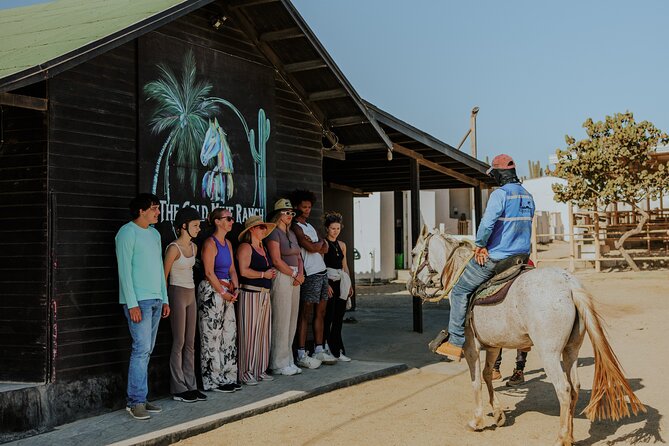
Plan to arrive at the ranch around 3:30 pm. The formal riding instructions begin then, and everyone must receive them before mounting. This is an important part of the experience, not a box to check while you wait.
The staff explains how to handle the horse and how to ride safely. First-time riders can use this time to ask questions and settle their nerves. Several riders with no previous experience found the instructions reassuring, while experienced riders appreciated having the group organized before setting out.
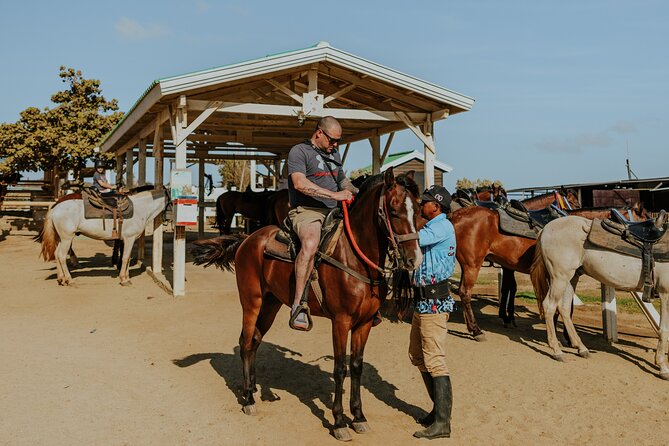
The horses are described as calm, gentle, well trained, and well cared for. Individual horses have personalities, of course, but the overall setup is designed for mixed ability levels. Guides stay involved throughout the ride, helping riders correct their handling and keeping the group together.
Helmets are optional for adults but required for children. I recommend one for every rider. Long pants are strongly advised because you will spend a substantial amount of time in the saddle, and firm shoes are much better than sandals on uneven ground. Hats are not allowed.
The stated weight limit is 220 pounds per rider. Another part of the tour information gives a 225-pound figure, but you should use the stricter 220-pound limit when deciding if you qualify. Do not assume the ranch can make an exception.
Along the rocky coast and open sea
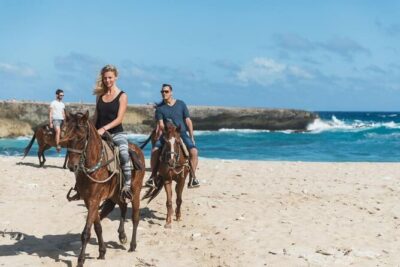
Once the horses leave the ranch, the coastal setting arrives quickly. The route moves through Aruba’s dry northern country, with the sea visible across much of the ride. You can expect cactus, rough ground, and a breeze coming off the water.
This is the part of the tour that requires realistic expectations. The north coast is not a continuous strip of soft sand. Much of the ride is over a trail through rocky, dry terrain, and the group may travel single file. A three-star account described the beach portion as mainly a photo stop, with the rest of the ride on cactus and rocky ground.
That criticism is worth taking seriously. The advertising highlights beach riding, but the full experience is a mixture of coast, desert trail, ruins, and sand. If your main goal is to gallop beside the water for 90 minutes, this may disappoint you.
On the other hand, the varied route is exactly what makes the outing more interesting than a basic beach loop. You get changing views and a better sense of Aruba’s north side. Guides also stop along the way, explain the area, and take photos using your phone. Several riders especially valued the chance to see parts of the island they would not have reached by bus.
Bushiribana Gold Mill Ruins and Aruba’s gold rush
Passing the Bushiribana Gold Mill Ruins gives the ride a strong sense of place. The abandoned stone structure recalls Aruba’s gold rush, when ore from nearby hills was processed here.
You do not need to be a history expert to appreciate the stop. The ruins break up the riding and give the guide a natural point to explain how Aruba’s past was shaped by mining as well as tourism. Against the bare coast, the old mill also makes a memorable photo background.
The stop is not presented as a long museum visit. You are passing through the site as part of the horseback route, so keep your expectations modest. The value comes from seeing the ruins in context, on a working trail rather than during a separate, formal heritage tour.
This is one reason I prefer the excursion to a standard resort activity. You get scenery, animals, local history, and a little physical effort in one compact outing.
Same saddle, a different kind of ground:
- Hurghada: Red Sea & Desert Horse Riding Tour with Swimming
★ 4.8 · 2,198 reviews - El Salobre: Horse Riding Adventure with Transfer Options
★ 4.5 · 2,034 reviews - Half-Day Thoroughbred Horse Farm Tour in Kentucky
★ 5.0 · 1,924 reviews - Cappadocia: Horseback Riding Adventure Tour
★ 5.0 · 1,881 reviews
Wariruri Bay, beach sand, and the baby natural bridge
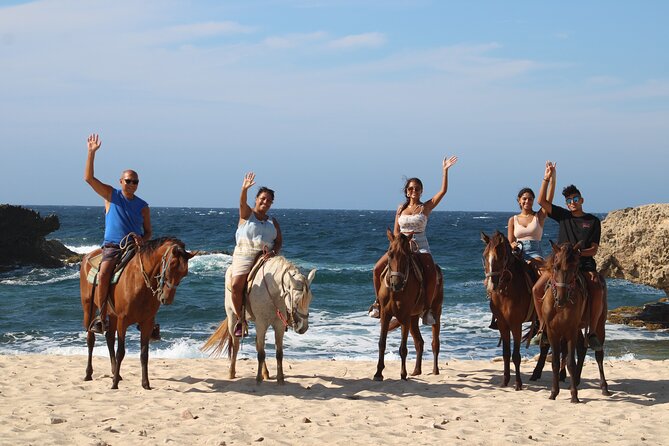
Wariruri Bay is the most playful part of the ride. Here, the route reaches white sand, dunes, and the small natural bridge often called the baby natural bridge. The guide stops for photos, and the setting gives you the classic horseback-on-the-beach moment many people want from an Aruba excursion.
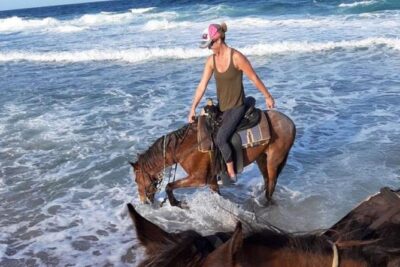
The horses may walk along the beach or pick up the pace on suitable stretches. Some riders were able to gallop, while others experienced a more controlled ride. Your speed depends on the group, the horses, the trail conditions, and the guide’s judgment.
That difference matters. The tour is suitable for beginners, but beginner-friendly rides are not usually nonstop gallops. Guides need to protect the less experienced riders, keep the horses safe, and manage the terrain. If you are an experienced rider, you may still find the beach sections exciting, but do not book this expecting a private training session or an advanced horseback adventure.
The photo stops are a real part of the value. Guides pause at scenic points and help take pictures with your phone. One useful suggestion is to ask for a group or family photo on horseback, not only individual portraits. The photo service is informal, so speak up if you want everyone included.
What the guides and horses add
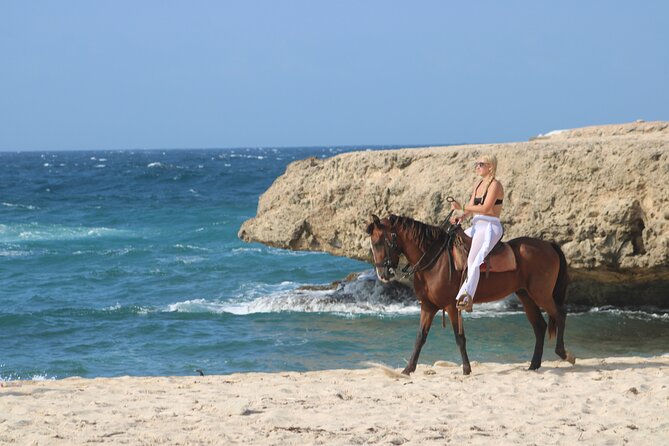
The guides are central to the experience. They lead the horses, explain the area, watch how riders handle their mounts, and help nervous beginners. Riders have singled out guides including Jeanrick and Jesus for their friendly manner and local insight, though the guide assigned to you will depend on the date.
The best moments often come from this personal attention. A first-time rider may start tense during the instructions, then relax once the horse settles into the route. Guides can adjust their position, correct a rider’s hands or reins, and keep a horse close when someone needs extra support.
The horses are another strength. They are described as sweet, experienced, healthy, and well cared for. You will still need to respect them. Horses are not machines, and one account described an accidental kick during the ride. That incident does not define the tour, but it is a reminder to follow directions, give horses space, and avoid crowding them.
Experienced riders should appreciate that the horses are not simply being pulled around without rider input. You may get to guide your horse more actively and ask for a faster pace where the guide allows it. Beginners receive the support needed to build confidence without being left to figure things out alone.
Group size, pace, and comfort
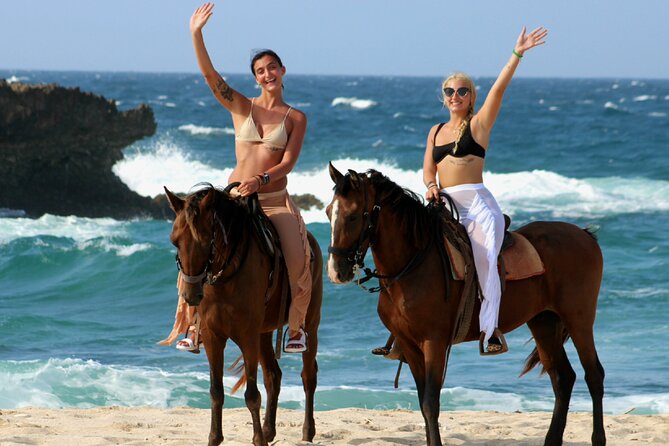
A maximum of 10 riders is a practical advantage. It is small enough for the guide to keep an eye on everyone, yet large enough that the ride still feels social. A small group also reduces the waiting time at photo stops compared with a large stable operation.
The tradeoff is that the pace must suit the whole group. You may spend stretches walking in a line, especially on rocky trails. If someone needs extra help, the ride cannot simply continue at the speed of the strongest rider.
Bottled water is included, which is useful in Aruba’s dry climate. An air-conditioned vehicle is also listed among the inclusions, but private transportation is not. If you need hotel pickup, contact the operator with your hotel information and ask about the pickup time. Do not assume transportation is automatic.
The scheduled start is 4 pm, but your day begins earlier than that if you include the required instructions and arrival time. Allow enough time to reach Matividiri 60 in Paradera without rushing.
Who will enjoy this most
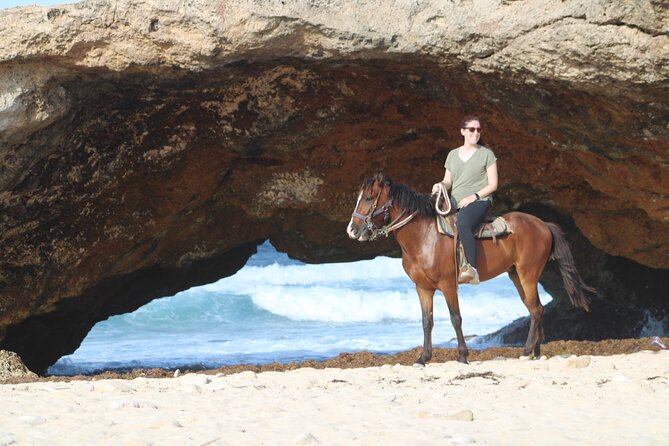
I would recommend this tour to:
- First-time riders who want clear instruction and close guide support
- Couples looking for a scenic activity beyond the resort beaches
- Families with children who meet the stated requirements
- Experienced riders who enjoy a relaxed mixed-ability ride with some faster sections
- Anyone interested in Aruba’s north coast, old mining sites, and unusual photo locations
I would think twice if you dislike sitting in a saddle, want a completely private outing, or expect continuous galloping. You should also reconsider if you cannot meet the 220-pound weight limit, need a fully accessible activity, or prefer a polished attraction with little dust, rock, or physical effort.
The ride is active but not an extreme sport. You may feel stiff or sore afterward, especially if it is your first time on a horse. That is normal enough to plan around, particularly if you have another demanding activity scheduled that evening.
Is the $100 price good value?
At $100, the excursion is not the cheapest way to see Aruba’s coast. You are paying for more than the horse itself: instruction, tack, a helmet option, guide support, bottled water, coastal access, stops at the ruins and Wariruri Bay, and informal photography help.
The small group improves the value. With no more than 10 riders, the guide has a better chance of helping you personally. The scenic route also gives the tour more substance than a short stable ride.
Still, the value depends on what you want. If you mainly want a photograph on a horse beside white sand, a shorter activity might cost less. If you want a guided introduction to horseback riding with a mix of scenery, history, and beach time, the price is easier to justify.
Free cancellation is available up to 24 hours before the local start time. Late cancellations and changes are not refunded. The ride also needs good weather and a minimum number of participants, so a weather cancellation may lead to a new date or a full refund.
Should you book the north coast ride?
Book it if you want to see a less familiar side of Aruba from horseback, especially if you are a beginner or mixed-experience group. The calm horses, patient instruction, small group, old gold mill, and Wariruri Bay photo stop give the outing more character than a simple beach circuit.
Do not book it solely for nonstop beach riding. The route includes rocky cactus country, single-file sections, and plenty of walking. That is not a flaw for the right rider. It is simply the honest shape of the experience.
For the best chance of enjoying it, arrive by 3:30 pm, wear long pants and firm shoes, use the recommended helmet, bring your phone for photos, and ask for a full group picture at the beach. If those details suit you, this is a memorable way to trade Aruba’s resort strip for its wilder northern edge.
FAQ
Where does the horseback riding tour begin?
The tour begins at The Gold Mine Ranch Aruba, located at Matividiri 60 in Paradera, Aruba. The activity ends at the same meeting point.
What time should I arrive?
You should arrive at 3:30 pm because riding and safety instructions begin then. The scheduled riding start time is 4 pm.
How many people can join the tour?
The activity has a maximum of 10 participants.
Is the tour suitable for beginners?
Yes. Riding instruction is required before mounting, and the horses are described as calm and well trained. The tour is intended for both beginners and experienced riders.
What should I wear?
Long pants and firm shoes are strongly advised. Hats are not allowed. Helmets are optional for adults but mandatory for children.
What is the cancellation policy?
You can cancel at least 24 hours before the start time for a full refund. Cancellations or changes made less than 24 hours before the start time are not refunded. If poor weather or an insufficient number of participants cancels the activity, you can choose another date or receive a full refund.
Just added around the world
- Austin: Maverick Horsemanship Trail Ride★ 4.3 · 8 reviews
- Aveiro: Horse Riding Experience with Instructor★ 4.6 · 37 reviews
- Arcos de la Frontera: Horseback Riding Experience★ 3.5 · 13 reviews
- Bahamas: Nassau Horseback Riding on Beaches & Trails★ 4.7 · 3 reviews
- Antalya : Belek , Kundu , Horse Riding★ 4.7 · 19 reviews
- Andalucia: Horse Riding Tour with Picnic★ 5.0 · 3 reviews
- Ao Nang: Horse Riding Tour and kayaking clongrood★ 5.0 · 4 reviews
- Algarve Horseriding tour in the countryside of Aljezur Rogil★ 5.0 · 30 reviews
Aruba Horseback Riding Tours, compared.
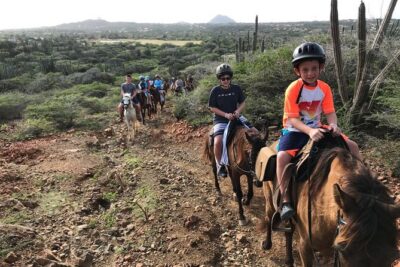
Horseback Ride Tour to Natural Pool in Arikok National Park
Read our review →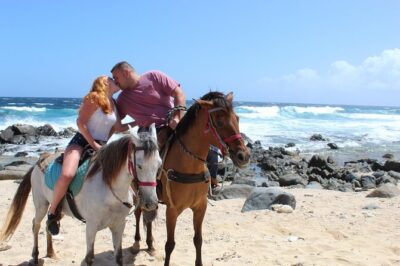
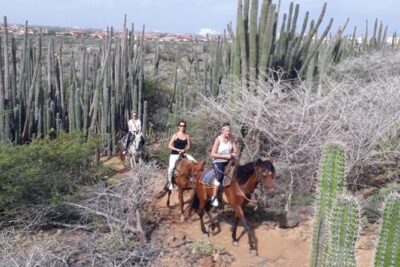
Aruba Countryside: Horseback Adventure to Urirama Cove
Read our review →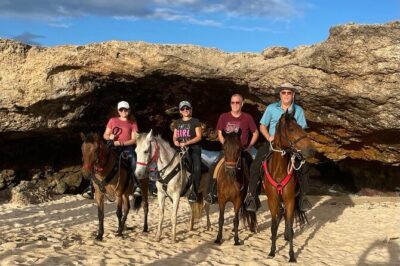
2-Hour Horseback Riding Tour to Little Natural Bridge in Aruba
Read our review →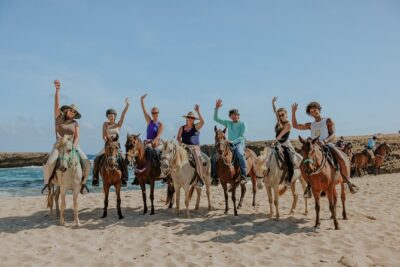
Aruba Horseback Riding Tour For Advanced Riders
Read our review →
Browse the lists this tour appears in